Ayurvedic Tips for Managing Back Pain After Delivery
Nivera Child Development Centre > Post-Delivery Care > Ayurvedic Tips for Managing Back Pain After Delivery
Back pain after delivery is one of the most common concerns faced by new mothers. The physical strain of pregnancy, changes in posture, hormonal shifts, muscle weakness, and the stress of caring for a newborn can all contribute to persistent discomfort. Ayurveda offers gentle yet effective solutions to manage postpartum back pain naturally by addressing its root causes rather than just symptoms.
This blog explains why back pain occurs after childbirth and how Ayurvedic practices help restore strength, balance, and comfort during the postnatal period.
From an Ayurvedic perspective, childbirth leads to a significant increase in Vata dosha. Vata governs movement, dryness, and nerve function. When aggravated, it can cause pain, stiffness, weakness, and instability in the lower back and spine.
Common reasons for postpartum back pain include:
➡️ Weakening of core and pelvic muscles
➡️ Ligament laxity caused by pregnancy hormones
➡️ Improper posture during breastfeeding
➡️ Carrying the baby frequently
➡️ Lack of rest and poor sleep
➡️ Nutritional deficiencies
➡️ Improper recovery after delivery
Ayurveda focuses on stabilizing Vata, nourishing tissues, and rebuilding strength gradually.
Ayurveda does not treat back pain in isolation. Instead, it considers the mother’s digestion, tissue health, mental well-being, and daily routine. The goal is to provide warmth, lubrication, nourishment, and rest to the body.
Key principles include:
➡️ Pacifying aggravated Vata
➡️ Strengthening muscles and joints
➡️ Improving circulation
➡️ Supporting tissue regeneration
➡️ Reducing stress and fatigue
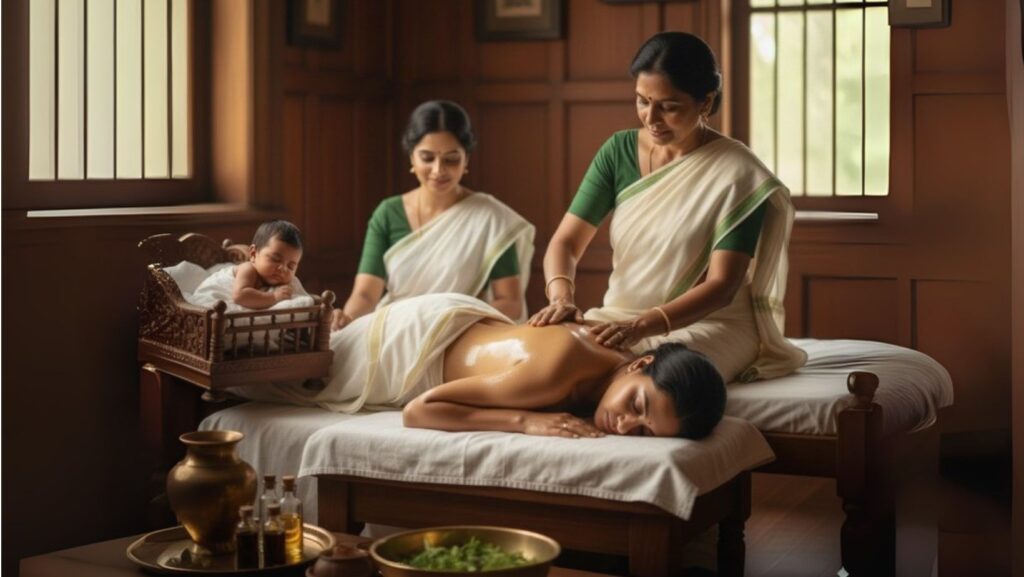
One of the most effective Ayurvedic remedies for postpartum back pain is Abhyanga, or warm oil massage. Herbal oils such as Dhanwantharam Thailam, Ksheerabala Thailam, and Mahanarayana Thailam are commonly used.
Benefits of Abhyanga include:
➡️ Reduces stiffness and muscle spasms
➡️ Improves blood circulation
➡️ Nourishes muscles and joints
➡️ Relaxes nerves and reduces stress
➡️ Improves sleep quality
Daily or regular massage during the postnatal period helps restore flexibility and comfort.
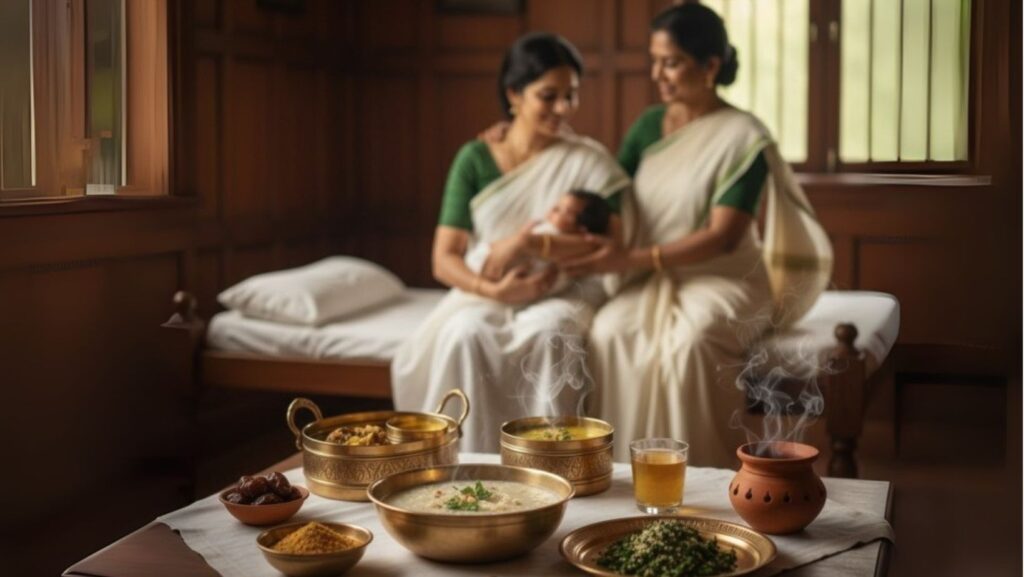
Diet plays a crucial role in postpartum recovery. A Vata-pacifying diet helps reduce pain and supports muscle strength.
Recommended foods include:
➡️ Warm rice gruel with ghee
➡️ Moong dal and lentil soups
➡️ Garlic, cumin, ginger, and fenugreek
➡️ Sesame seeds and dry fruits
➡️ Herbal tonics like Dashamoolarishtam
Cold foods, processed snacks, carbonated drinks, and excessive dry foods should be avoided as they worsen Vata and pain.
Ayurveda supports gradual strengthening of the back through gentle movement. After the initial recovery phase, supervised postnatal yoga and physiotherapy help improve posture and core stability.
Benefits include:
➡️ Strengthens spinal muscles
➡️ Improves posture
➡️ Reduces long-term pain
➡️ Enhances flexibility
Exercises must be introduced slowly and tailored to the mother’s delivery type and physical condition.
Poor posture while feeding the baby is a major contributor to back pain. Ayurveda emphasizes mindful body alignment during daily activities.
Helpful tips:
➡️ Sit with back support
➡️ Keep feet flat on the ground
➡️ Bring the baby to the breast instead of bending forward
➡️ Use pillows to support arms and back
Small posture corrections can significantly reduce strain on the spi
Certain Ayurvedic formulations are traditionally used to strengthen bones, nerves, and muscles after delivery. These include:
➡️ Dashamoolarishtam for pain relief and tissue healing
➡️ Yogaraja Guggulu (only under medical advice)
➡️ Ashwagandha preparations for strength and nerve support
All medicines should be taken strictly under the guidance of a qualified Ayurvedic physician
Ayurveda considers rest as a powerful medicine. Insufficient sleep and emotional stress can worsen pain perception.
Practices that support healing include:
➡️ Adequate rest and naps
➡️ Warm foot massage before sleep
➡️ Calm, positive environment
➡️ Emotional support from family
Mental relaxation directly influences physical recovery.
If back pain persists beyond a few weeks, worsens over time, or affects daily activities, professional evaluation is essential. A combined approach using Ayurveda, physiotherapy, and posture correction provides the best outcomes for long-term relief.
At Nivera Multi-Disciplinary Centre, Kochi, postnatal back pain management programs are customized for each mother, integrating traditional Ayurvedic therapies with modern rehabilitation techniques.
Back pain after delivery is common, but it should not be ignored or accepted as normal. Ayurveda offers a time-tested, holistic approach that addresses the root causes of postpartum back pain by balancing Vata, nourishing tissues, and restoring strength naturally.
With the right therapies, diet, and daily routine, new mothers can recover comfortably and enjoy motherhood without persistent pain.
Holistic healing with trusted Ayurvedic care
Struggling with back pain after delivery?
Get personalized Ayurvedic postnatal care designed to heal pain, strengthen your spine, and restore comfort naturally.
KOCHI, KERALA
Child development Centre, speech therapy centre, occupational therapy centres,behaviour therapy centres , education therapy center, special education center , autism treatment centres , aba treatment center, adhd treatment centre, ayurveda treatment for autism , child physiotherapy centre
Leave a Reply