Our Archive

Welcom to our archive

Nivera Child Development Centre > NIVERA Child Development Centre

learning difficulties
In today’s digital age, children spend more time indoors than ever before. While technology has its place, outdoor play remains one of the most powerful tools for healthy child development. Outdoor activities help children grow physically, emotionally, socially, and cognitively. At Nivera Child Development Centre in Kochi, Kerala, outdoor play is encouraged as a natural and essential part of early intervention, therapy, and holistic child development programs. Outdoor play allows children to explore their environment freely, engage their senses, and build real-world skills that indoor activities alone cannot provide. It supports overall development while promoting happiness, confidence, and independence. Physical Development Through Outdoor Play Outdoor play strengthens a child’s body by improving muscle strength, balance, coordination, and endurance. Activities such as running, climbing, jumping, cycling, and playing ball games help develop gross motor skills and improve cardiovascular health. Regular outdoor movement also reduces the risk of childhood obesity and promotes healthy growth patterns. For children attending a child development centre in Kochi, outdoor play complements physiotherapy and occupational therapy by encouraging natural movement in an enjoyable, pressure-free environment. Cognitive Growth and Learning Outdoor play enhances brain development by stimulating curiosity, problem-solving, and creativity. When children play outside, they learn to make decisions, assess risks, and adapt to new situations. Natural environments encourage exploration, imagination, and independent thinking, all of which support cognitive development. Children who engage in outdoor activities often show better attention span, memory, and learning readiness. This is especially beneficial for children with developmental delays, ADHD, or sensory processing challenges. Emotional Well-Being and Mental Health Spending time outdoors has a calming effect on children’s minds. Exposure to sunlight and fresh air helps regulate mood, reduce anxiety, and improve sleep patterns. Outdoor play allows children to release built-up energy and emotions in a healthy way, leading to improved emotional regulation. At Nivera Child Development Centre, Kerala, outdoor play is often recommended as part of behavioural and emotional development strategies, particularly for children who experience stress, hyperactivity, or emotional sensitivity. Social Skills and Communication Outdoor play provides natural opportunities for social interaction. Children learn important social skills such as sharing, turn-taking, cooperation, and conflict resolution while playing with peers. Group games and free play help children develop communication skills and build friendships. For children attending therapy or daycare programs, outdoor play supports social development by creating relaxed, inclusive environments where children can interact naturally. Sensory Integration and Confidence Building Outdoor environments offer rich sensory experiences through textures, sounds, movements, and visual stimuli. These experiences are particularly beneficial for children with sensory processing difficulties. Outdoor play helps children tolerate different sensations and improves sensory integration. As children overcome small physical challenges outdoors, they gain confidence and independence. This sense of achievement positively impacts self-esteem and motivation. Outdoor Play in Early Intervention and Therapy Outdoor play plays a vital role in early intervention programs. It supports developmental milestones while making therapy enjoyable and engaging. Therapists often use outdoor activities to enhance motor planning, coordination, and attention in a natural setting. Parents searching for a holistic child development centre in Kochi benefit from centres like Nivera that integrate outdoor play into structured therapy programs. Encouraging Outdoor Play at Home Parents can support healthy child development by encouraging daily outdoor play. Simple activities such as park visits, nature walks, free play, and family games can make a significant difference. Limiting screen time and creating opportunities for outdoor movement helps children stay active and engaged. Consistency is key—regular outdoor play builds lifelong habits that support physical and mental well-being. Why Outdoor Play Matters at Nivera Child Development Centre At Nivera Child Development Centre in Kochi, Kerala, outdoor play is viewed as more than just recreation. It is an essential component of holistic child development. By combining therapy, structured guidance, and free play, Nivera ensures children receive balanced support that nurtures their overall growth. vision for your kid Let Your Child Learn, Play, and Grow with Confidence At Nivera Child Development Centre, Kochi, we combine outdoor play with expert-guided therapy to support your child’s physical, emotional, and social development. Book a consultation today and take the first step toward a healthier, happier future for your child. Book your Consultation Outdoor play is essential for healthy child development. It supports physical fitness, cognitive growth, emotional balance, social skills, and sensory integration. When combined with professional therapy and guidance, outdoor play becomes a powerful tool for lifelong development. If you are looking for a child-focused, holistic approach to development in Kochi, Nivera Child Development Centre is committed to helping children grow, learn, and thrive naturally. Frequently Asked Questions (FAQ) Why is outdoor play important for child development? Outdoor play supports physical growth, brain development, emotional well-being, and social skills by encouraging natural movement and exploration. How much outdoor play do children need daily? Children should ideally spend at least 60 minutes a day in active outdoor play for healthy development. Does outdoor play help children with developmental delays? Yes, outdoor play improves motor skills, attention, sensory integration, and emotional regulation, especially for children with developmental challenges. Can outdoor play reduce screen dependency in children? Regular outdoor activities help reduce excessive screen time and encourage healthier daily routines. Is outdoor play beneficial for children with ADHD or autism? Outdoor play helps improve focus, reduce hyperactivity, support sensory processing, and enhance social interaction. What types of outdoor activities are best for children? Free play, running, climbing, cycling, ball games, and nature-based activities are highly beneficial. How does outdoor play support mental health? Exposure to sunlight, fresh air, and physical movement helps reduce stress, anxiety, and mood fluctuations in children. Can outdoor play be part of therapy programs? Yes, many child development centres integrate outdoor play into therapy to improve engagement and outcomes. Is outdoor play safe for young children? With supervision and age-appropriate activities, outdoor play is safe and highly beneficial. How does Nivera Child Development Centre use outdoor play? Nivera integrates guided outdoor activities into therapy and early intervention programs to support holistic child development.
Read More
choose-right-therapy-centre-child-kochi
Choosing the right therapy centre for your child is one of the most important decisions a parent can make. Whether your child needs support for speech delay, autism, ADHD, developmental delay, sensory issues, or motor challenges, the quality of therapy can significantly impact their long-term development. In a city like Kochi, Kerala, where multiple child therapy centres are available, knowing what to look for helps parents make confident and informed choices. At Nivera Child Development Centre in Kochi, we understand that every child is unique, and selecting the right centre should be based on trust, expertise, and a child-centric approach rather than proximity alone. Understand Your Child’s Specific Needs Before selecting a therapy centre, it is essential to clearly understand your child’s developmental needs. Some children may require speech therapy, others occupational therapy, physiotherapy, behavioural therapy, or a combination of services. Centres that offer multidisciplinary care under one roof often provide better coordination and consistent progress. Parents searching for a child development centre in Kochi or a therapy centre near me should ensure the centre conducts proper assessments and offers individualized therapy plans rather than one-size-fits-all programs. Look for Qualified and Experienced Therapists The effectiveness of therapy depends largely on the expertise of the therapists. Qualified professionals with experience in paediatric therapy, autism intervention, ADHD management, and developmental rehabilitation are crucial. Therapists should be trained not only clinically but also in child-friendly, compassionate care. At Nivera Child Development Centre, Kerala, therapy programs are guided by experienced professionals who work closely with children and parents to ensure consistent, measurable progress. Importance of a Multidisciplinary Approach Children with developmental challenges often benefit most from an integrated therapy model. A centre that combines speech therapy, occupational therapy, physiotherapy, behavioural therapy, and psychological support ensures holistic development. Choosing a multidisciplinary therapy centre in Kochi reduces the need to visit multiple locations and allows therapists to collaborate, leading to better outcomes for the child. Child-Friendly and Safe Environment A therapy centre should feel welcoming, safe, and comfortable for children. The physical environment plays a major role in how well a child engages in therapy. Bright, clean spaces with appropriate therapy equipment help children feel relaxed and motivated. Parents looking for the best therapy centre for children in Kochi should observe how children interact with therapists and whether the centre prioritises safety, hygiene, and emotional comfort. Parental Involvement and Communication Effective therapy does not end at the centre. Parents should be actively involved in the therapy process. A good therapy centre educates parents, provides regular feedback, and offers guidance for home-based activities. Centres like Nivera Child Development Centre emphasize parent counselling and training, ensuring continuity of care beyond therapy sessions. Individualised Therapy Plans and Progress Tracking Each child progresses at their own pace. The right therapy centre will create personalised goals and regularly track progress through assessments and reviews. Transparent communication about milestones, challenges, and next steps builds trust and confidence. Avoid centres that promise quick fixes. Developmental therapy is a gradual process that requires consistency and patience. Location, Accessibility, and Consistency While searching for a therapy centre near me in Kochi, location and accessibility matter. Consistent attendance is key to successful outcomes, so choosing a centre that fits into your daily routine helps maintain regular therapy sessions. Nivera Child Development Centre is strategically located in Kochi, making it accessible for families across Ernakulam and nearby areas. Why Parents Trust Nivera Child Development Centre Nivera Child Development Centre in Kochi, Kerala, is known for its child-centric, ethical, and evidence-based approach. With a focus on early intervention, integrated therapy, and family support, Nivera ensures that every child receives personalised care in a nurturing environment. Parents searching for a trusted child therapy centre in Kochi choose Nivera for its professional expertise, compassionate care, and commitment to long-term developmental success. vision for your kid Take the Right Step for Your Child’s Future Choosing the right therapy centre can make a lasting difference in your child’s growth and confidence. At Nivera Child Development Centre, we offer expert, compassionate care tailored to your child’s unique needs. Reach out today and start your child’s journey toward better development and well-being.      Book your Consultation Choosing the right therapy centre can shape your child’s developmental journey. By focusing on professional expertise, a multidisciplinary approach, parental involvement, and a supportive environment, parents can make informed decisions that benefit their child’s future. If you are looking for a reliable, holistic, and child-focused therapy centre in Kochi, Nivera Child Development Centre is here to support your child every step of the way. Frequently Asked Questions (FAQ) How do I know if my child needs therapy? If your child shows delays in speech, movement, learning, behaviour, or social interaction, a developmental assessment at a child therapy centre is recommended. What therapies should a good child therapy centre offer? A quality centre should provide speech therapy, occupational therapy, physiotherapy, behavioural therapy, and psychological support under one roof. How important are therapist qualifications? Highly qualified and experienced pediatric therapists are essential for safe, effective, and evidence-based child development therapy. How often should therapy sessions be conducted? Frequency depends on the child’s condition and therapy plan. Consistency is more important than intensity for long-term improvement. Should parents be involved in therapy sessions? Yes. Parental involvement enhances progress by reinforcing therapy strategies at home and improving understanding of the child’s needs. What age should therapy begin? Early intervention is ideal. Therapy can start as early as infancy if developmental delays are identified. How long does therapy usually take? Therapy duration varies based on the child’s needs, severity of delay, and consistency of sessions. How do I choose the best therapy centre in Kochi? Look for experienced therapists, individualized care plans, parent involvement, and a safe, child-friendly environment. Is Nivera Child Development Centre suitable for different developmental needs? Yes. Nivera offers integrated, child-focused therapy programs for autism, ADHD, speech delays, and developmental challenges.
Read More
benefits of physical exercise in children with ADHD
Children with Attention Deficit Hyperactivity Disorder (ADHD) often face challenges with focus, impulse control, emotional regulation, and social interaction. In Kerala, where awareness about child development is growing, physical exercise is increasingly recognised as a powerful, natural, and supportive therapy for children with ADHD. At Nivera Child Development Centre, structured physical activity is integrated into therapeutic programs to support holistic child development. Physical exercise plays a crucial role in improving brain function, behaviour, and emotional well-being in children with ADHD. Research shows that regular movement-based activities stimulate neurotransmitters such as dopamine and serotonin, which are typically low in children with ADHD. These chemicals are essential for attention, motivation, and mood balance, making exercise an effective non-invasive intervention. How Physical Exercise Supports Brain Development in ADHD Physical activity enhances blood flow to the brain, particularly to areas responsible for executive functioning, memory, and attention control. For children with ADHD, this leads to improved concentration, better listening skills, and reduced hyperactivity. Activities like running, cycling, jumping, swimming, and structured play help regulate excess energy while strengthening neural connections. In Kerala’s child development ecosystem, centres like Nivera Child Development Centre in Kochi focus on age-appropriate, goal-oriented exercise routines that align with each child’s abilities. These programs are often integrated alongside therapies offered in autism daycare centers in Kochi, as many children present with overlapping developmental needs. Behavioural and Emotional Benefits of Exercise for ADHD Children Regular physical exercise helps children with ADHD manage impulsive behaviours and emotional outbursts. Movement-based routines teach children discipline, patience, and self-control over time. Exercise also reduces anxiety and stress by lowering cortisol levels, helping children feel calmer and more balanced throughout the day. Children who participate in daily physical activities show better sleep patterns, improved appetite, and enhanced emotional resilience. These benefits are especially important in structured care environments such as daycare and therapy-based programs in Kochi, where emotional regulation directly impacts learning and social interaction. Improvement in Social Skills and Confidence Physical exercise often involves group play, cooperative games, or guided interaction, which helps children with ADHD develop social skills naturally. Participating in team activities teaches turn-taking, communication, empathy, and cooperation. Over time, children gain confidence as they achieve small physical goals, improving self-esteem and motivation. At Nivera, physical activity is carefully structured to ensure inclusivity, making it suitable for children attending ADHD programs, autism daycare centers in Kochi, and integrated child development services. This inclusive approach encourages peer bonding and positive social behaviour. Role of Structured Exercise in Therapy-Based Care Unlike unstructured play, therapeutic physical exercise is goal-driven and monitored by trained professionals. It complements occupational therapy, behavioural therapy, and sensory integration therapy by improving body awareness, balance, coordination, and motor planning. For children with ADHD, this structured movement significantly enhances therapy outcomes. In Kerala, especially in urban hubs like Kochi, parents increasingly seek centres that offer combined care. Nivera Child Development Centre, known for its therapy-integrated daycare and rehabilitation services, ensures that physical exercise is not just an activity but a therapeutic tool supporting long-term development. Physical Exercise in Early Intervention and Daycare Settings Early intervention is key in managing ADHD symptoms effectively. Introducing physical exercise during early childhood helps shape better behavioural patterns and cognitive skills. In daycare environments, including autism daycare centers in Kochi, structured physical routines support attention span, reduce restlessness, and prepare children for academic learning. Children attending daycare programs with integrated physical activity show improved readiness for school, better classroom behaviour, and enhanced learning capacity. Why Physical Exercise Matters for Children with ADHD in Kerala Kerala’s lifestyle changes, increased screen time, and reduced outdoor play have contributed to attention and behavioural challenges in children. Incorporating regular physical exercise helps counter these effects naturally. With professional guidance, exercise becomes a safe, effective, and affordable way to support children with ADHD across different developmental settings. Parents searching for child development centres, ADHD support programs, or autism daycare centers near me in Kochi benefit from choosing centres that emphasise movement-based therapy as part of a holistic care model. vision for your kid Help Your Child Thrive with the Right Movement Therapy If your child shows signs of ADHD such as poor focus, hyperactivity, or emotional imbalance, structured physical exercise can make a lasting difference. At Nivera Child Development Centre, Kochi, our child-centric programs integrate therapeutic physical activity with expert guidance. Book a consultation today and discover how movement-based therapy can support your child’s growth, confidence, and overall development. Book your Consultation Physical exercise is not just beneficial but essential for children with ADHD. It strengthens the brain, improves behaviour, enhances emotional regulation, and builds social confidence. When integrated into a structured therapeutic environment, exercise becomes a powerful tool for long-term developmental success. Nivera Child Development Centre in Kochi, Kerala, remains committed to providing evidence-based, child-centric programs that combine physical activity with expert therapeutic care.
Read More
pediatric therapy services Kerala
Parents across Kerala are increasingly seeking reliable pediatric therapy services as more children experience challenges related to speech, motor skills, behaviour, learning, and sensory processing. Pediatric therapy focuses on supporting a child’s development during the most critical years of growth, when the brain is highly adaptable and responsive to intervention. Early, structured therapy can significantly enhance a child’s ability to communicate effectively, move with confidence, regulate emotions, and succeed in both academic and social environments. Pediatric therapy services are designed not only for children with diagnosed conditions but also for those who show developmental delays, learning difficulties, behavioral concerns, or sensory challenges.  When therapy begins early, children gain skills faster and build a stronger foundation for long-term development. Why Pediatric Therapy Services Are Essential for Children in Kerala Kerala has witnessed noticeable changes in childhood development patterns over the past decade. Increased screen exposure, reduced outdoor play, limited peer interaction, and rising academic pressure have affected how children develop communication, attention, and motor skills. As a result, many parents notice that their child is not meeting expected milestones or is struggling to adapt to school routines. Pediatric therapy services in Kerala address these concerns by offering professional guidance based on developmental science rather than assumptions or delayed reassurance. Early therapy helps children adapt to their environment, manage challenges effectively, and develop confidence in their abilities. What Pediatric Therapy Services in Kerala Actually Include A comprehensive pediatric therapy program focuses on the whole child rather than isolated symptoms. Pediatric therapy services in Kerala typically include speech therapy, occupational therapy, pediatric physiotherapy, behavior therapy, sensory integration therapy, special education, and counseling. These services are delivered by trained professionals who understand how different developmental areas are interconnected. Children often show progress when therapy is integrated across disciplines. For example, a child with speech delay may also struggle with sensory processing or attention, while behavioral challenges may stem from communication difficulties. Pediatric therapy services work best when therapists collaborate to create a unified, individualized plan. How Pediatric Therapy Supports Speech and Communication Development Speech and language difficulties are among the most common reasons parents seek pediatric therapy services. Children may have limited vocabulary, unclear speech, difficulty understanding instructions, or challenges expressing needs. Speech therapy helps improve language comprehension, expressive skills, pronunciation, and social communication. When speech therapy begins early, children develop stronger communication foundations that support learning, peer interaction, and emotional expression. Pediatric therapy services in Kerala emphasise natural, play-based methods that encourage communication in everyday situations. Role of Occupational Therapy in Pediatric Development Occupational therapy is a core part of pediatric therapy services in Kerala because it supports essential daily skills. Children who struggle with fine motor coordination, handwriting readiness, attention, sensory processing, or self-care activities benefit greatly from occupational therapy. Through structured activities, occupational therapy helps children regulate sensory input, improve focus, develop independence, and participate confidently in school and home routines. These skills directly influence academic performance and social participation. Pediatric Physiotherapy and Motor Skill Development Motor development plays a vital role in a child’s overall growth. Pediatric physiotherapy supports children who experience delayed milestones, poor balance, weak muscle tone, coordination difficulties, or postural challenges. Physiotherapy helps children move efficiently and confidently, which directly affects their ability to explore, learn, and interact with their environment. Pediatric therapy services in Kerala often include physiotherapy to strengthen gross motor skills and ensure that physical development supports cognitive and emotional growth. Behavior Therapy and Emotional Regulation in Children Behavioral challenges such as hyperactivity, frequent tantrums, poor attention, or difficulty following routines are common concerns among parents. Pediatric behavior therapy focuses on improving emotional regulation, attention control, routine tolerance, and positive social behavior. Behavior therapy does not aim to suppress a child’s personality but helps them understand and manage their responses effectively. When emotional regulation improves, children experience better relationships, learning outcomes, and self-confidence. Sensory Integration Therapy and Daily Functioning Many children experience difficulty processing sensory information such as sound, touch, movement, or visual input. These sensory challenges can affect attention, behavior, and participation in daily activities. Sensory integration therapy, as part of pediatric therapy services in Kerala, helps children respond to sensory input in a more organized and adaptive way. Improved sensory regulation allows children to sit in classrooms, interact with peers, follow instructions, and participate comfortably in everyday environments. Importance of Early Pediatric Therapy for School Readiness Pediatric therapy services play a crucial role in preparing children for school. Skills such as listening, attention, communication, fine motor control, emotional regulation, and routine following are essential for academic success. Children who receive therapy before entering school adapt more easily to classroom expectations and experience less stress during learning. Early pediatric therapy reduces the risk of long-term academic struggles and builds confidence in learning abilities. Parent Involvement in Pediatric Therapy Services Pediatric therapy is most effective when parents are actively involved. Therapy sessions alone are not enough if learning does not continue at home. Pediatric therapy services in Kerala that emphasize parent education and home programs consistently show stronger outcomes. Parents are guided on how to support communication, reduce screen time, establish routines, encourage play-based learning, and reinforce therapy goals during daily activities. This collaboration accelerates progress and ensures long-lasting improvement. How Nivera Child Development Center Delivers Pediatric Therapy Services in Kerala Nivera Child Development Center offers comprehensive pediatric therapy services in Kerala through a multidisciplinary, child-centered approach. Each child undergoes a detailed developmental assessment, followed by an individualized therapy plan tailored to their specific needs. Nivera’s team integrates speech therapy, occupational therapy, pediatric physiotherapy, behavior therapy, sensory integration, special education, and counseling under one roof. Regular progress monitoring and parent guidance ensure transparent, measurable development. The focus at Nivera is on early identification, structured intervention, and long-term developmental success rather than short-term symptom management. When Parents Should Seek Pediatric Therapy Services Parents should consider pediatric therapy services in Kerala if they notice delays in speech, movement, attention, behavior, sensory responses, or learning. Seeking professional support early is always beneficial, even if concerns seem mild. Therapy
Read More
Child Therapy Center Kerala
Parents across Kerala are increasingly searching for a reliable child therapy center in Kerala as more children experience challenges in speech, movement, behavior, learning, and sensory regulation.  These concerns are no longer limited to a small group of children. Changing lifestyles, increased screen exposure, reduced physical play, and rising academic pressure have significantly influenced early childhood development.  A child therapy center exists to identify these challenges early and provide structured, professional support that strengthens a child’s developmental foundation. A child therapy center is not meant only for children with severe or diagnosed conditions.  It supports children who struggle to communicate clearly, have difficulty focusing, show behavioral challenges, experience delayed milestones, or find it hard to adapt to school routines.  Early therapeutic support prevents small developmental gaps from turning into long-term difficulties and helps children gain confidence, independence, and functional skills. Why Parents in Kerala Are Seeking Child Therapy Services Across Kerala, awareness about child development has grown, and parents are becoming more observant of early warning signs. Many families notice that their child is not speaking as expected, struggles with coordination, avoids social interaction, or shows emotional outbursts that seem difficult to manage. These concerns often prompt parents to look for a child therapy center that offers professional guidance rather than temporary reassurance. Kerala’s fast-paced lifestyle, limited outdoor play, increased digital exposure, and early academic expectations have contributed to a rise in developmental concerns. Parents now understand that waiting for a child to “grow out of it” often leads to missed opportunities for improvement. Seeking therapy early is no longer seen as a last option but as a proactive step toward healthy development. What a Child Therapy Center in Kerala Actually Does A well-established child therapy center in Kerala provides comprehensive developmental support through a multidisciplinary approach. The focus is not just on one skill, such as speech or movement, but on the child’s overall functioning. Children are assessed by trained professionals who understand how different developmental areas influence one another. The process usually begins with a detailed developmental assessment that identifies strengths, challenges, and areas needing support. Based on this assessment, an individualized therapy plan is created. Therapy sessions are structured, play-based, and designed to help children learn naturally while working toward clear developmental goals. Progress is monitored regularly to ensure consistent improvement. Early Developmental Challenges That Need Therapy Support Many developmental challenges become visible in early childhood, even before formal schooling begins. Speech and language delays may appear when a child does not use words meaningfully, struggles to express needs, or has unclear speech for their age. Behavioral concerns may show as frequent tantrums, poor attention, difficulty following routines, or impulsive actions. Motor delays can involve late walking, poor balance, weak coordination, or difficulty with fine motor tasks such as holding a pencil or feeding independently. Some children experience sensory processing difficulties, where everyday sounds, textures, or movements feel overwhelming or uncomfortable. Others may struggle with learning readiness, memory, or problem-solving skills. A child therapy center in Kerala addresses these challenges early, helping children build the skills needed for daily life and school success. How Therapy Improves Speech, Behavior, Motor Skills and Learning Therapy works by strengthening the underlying skills that support development. Speech therapy improves communication by building vocabulary, sentence formation, clarity, and social interaction. Occupational therapy supports fine motor skills, sensory processing, attention, handwriting readiness, and daily living independence. Pediatric physiotherapy helps children improve posture, balance, strength, coordination, and overall motor control. Behavior therapy focuses on emotional regulation, attention, routine tolerance, and positive social behavior. Special education and educational therapy strengthen pre-academic skills, cognitive development, and learning strategies. When these therapies are integrated within a child therapy center, progress becomes more consistent and meaningful because all areas of development are addressed together. Importance of Early Therapy for Long-Term Development Early childhood is the period when the brain is most adaptable. Skills learned during this time are acquired faster and retained more effectively. Children who receive therapy early often show quicker improvements and require less intensive support later. Early therapy also reduces frustration, boosts confidence, and improves a child’s ability to participate in family, social, and school environments. In Kerala, many parents seek therapy only after school difficulties arise. However, therapy started before academic pressure begins leads to smoother school transitions, better attention, stronger communication, and improved emotional control. Early support does not label a child; it empowers them. Therapies Offered at a Child Therapy Center in Kerala A comprehensive child therapy center in Kerala offers multiple pediatric therapy services under one roof. These services commonly include speech therapy, occupational therapy, pediatric physiotherapy, behavior therapy, sensory integration therapy, special education, counseling, and school readiness programs. The integration of these therapies ensures that children receive holistic care rather than fragmented support. Each therapy plan is customized based on the child’s age, developmental level, and specific needs. This individualized approach ensures that therapy remains relevant, effective, and aligned with the child’s progress. Role of Parents in a Child’s Therapy Progress Parents play a crucial role in therapy outcomes. A child attending therapy sessions for a limited number of hours each week benefits most when learning continues at home. Child therapy centers that focus on parent guidance and home programs consistently show better results. Parents are guided on how to communicate effectively, encourage skill development through play, reduce excessive screen time, establish routines, and reinforce positive behaviors. When therapy strategies become part of daily life, children progress faster and more naturally. How Nivera Child Development Center Supports Children Effectively Nivera Child Development Center functions as a trusted child therapy center in Kerala by combining early identification, evidence-based therapy, and parent-centered care. Each child receives a comprehensive assessment followed by an individualized therapy plan designed to address specific developmental needs. Nivera’s multidisciplinary team works collaboratively to support speech, motor skills, behavior, sensory regulation, learning, and emotional well-being. Regular progress reviews and parent counseling ensure transparency and consistent improvement. The focus remains on building long-term developmental success rather than short-term fixes.
Read More
hand dominance in children
Hand dominance—whether a child prefers the left hand or the right hand—is a natural part of early motor development. It affects how a child writes, eats, throws, and performs most daily tasks. While parents often worry when their child switches hands or doesn’t show a clear preference, the truth is that hand dominance develops gradually and follows a predictable neurological timeline. This guide breaks down how hand dominance forms, when it becomes stable, and what parents should watch for. What Is Hand Dominance? Hand dominance refers to the consistent preference for using one hand—the dominant hand—for skilled tasks like writing, eating, holding tools, or drawing. The other hand becomes the non-dominant hand, mainly supporting the dominant hand’s actions. Hand dominance is controlled by the brain, specifically the division of tasks between the right and left hemispheres. ➡️ Left brain → controls right-hand movement ➡️ Right brain → controls left-hand movement A child’s brain gradually establishes which side is stronger for fine motor coordination. When Does Hand Preference Start to Appear? Hand preference does not appear overnight. It unfolds in stages: ➡️6–12 months Babies begin to reach for toys with both hands. Any temporary preference is random and not true dominance. ➡️ 12–18 months Children start experimenting with one hand for certain tasks, but switching is normal. ➡️ 2–3 years Early signs of preference appear, especially in drawing and feeding.However, many still switch hands when tasks get harder. ➡️ 4–5 years Hand dominance becomes more consistent. Most children show a clear preference during preschool years. ➡️ 6 years and above Dominance should be fully established. Switching hands frequently at this age may indicate underlying difficulties. How Do Children Develop Hand Dominance? Hand dominance develops through: 1. Brain Maturation The brain begins to specialize functions in one hemisphere. This neurological wiring drives hand preference. 2. Motor Skill Development As skills become more complex—coloring, cutting, building blocks—the child naturally chooses the hand with better control. 3. Repeated Practice Repeated use strengthens hand muscles, making one hand more efficient for skilled tasks. 4. Sensory-Motor Feedback Children learn which hand gives better precision, stability, and speed through trial and error. 5. Environmental Interaction The way objects are presented (to the right or left) influences practice but does not change natural dominance. Is It Normal for Children to Switch Hands? Yes—until age 4, switching hands is completely normal. Children switch hands because: ➡️ the task becomes too tiring ➡️ one hand is not strong enough ➡️ they are still exploring skill options ➡️ both sides of the brain are developing However, persistent switching after age 5–6 may suggest: ➡️ poor fine motor strength ➡️ weak core stability ➡️ delayed hand skill development ➡️ sensory processing challenges ➡️ coordination issues ➡️ developmental delay If switching continues, assessment by an occupational therapist helps identify the cause. Left-Handed vs. Right-Handed: What’s Normal? Both are normal. ➡️ 90% of children become right-handed ➡️ 10% become left-handed Left-handed children do not have developmental disadvantages. They simply process motor control differently. Parents should never force right-hand use, as this can affect: ➡️ handwriting ➡️ coordination ➡️ motor efficiency ➡️ attention ➡️ confidence Support the dominant hand your child naturally chooses What About Mixed Handedness or Cross Dominance? ➡️ Mixed Handedness The child switches hands for the same task (e.g., sometimes writing with the right, sometimes left). ➡️ Cross Dominance The child uses different hands for different tasks(e.g., right hand for writing but left hand for throwing). Both patterns may be normal in early years but should stabilize by age 6. If not, it may indicate: ➡️ weak midline crossing ➡️ coordination issues ➡️ attention difficulties ➡️ motor planning challenges Early therapy can strengthen hand preference and improve school readiness. How Can Parents Support Healthy Hand Dominance? Provide fine motor activities ➡️ Coloring ➡️ Playdough ➡️ Threading beads ➡️ Building blocks ➡️ Pegboards ➡️ Scissor practice Encourage midline crossing Activities where a child reaches across their body help the brain choose a dominant hand. Examples: ➡️ Passing objects across the body ➡️ Drawing large figure-eight motions ➡️ Ball games Observe, don’t force Let the child naturally choose their dominant hand. Offer items at the center, not to one side Offer items at the center, not to one side Strengthen core and shoulder muscles A stable body improves hand control. Seek help if needed If your child: ➡️ switches hands after age 6 ➡️ has poor handwriting ➡️ avoids fine motor tasks ➡️ struggles with coordinationthey may benefit from occupational therapy. When Should Parents Be Concerned? Consult a specialist if your child: ➡️ Has no clear hand preference by 6 years ➡️ Fatigues easily with hand tasks ➡️ Always switches hands during writing ➡️ Cannot cross the body’s midline ➡️ Shows poor grip strength ➡️ Avoids using one hand entirely ➡️ Has messy or inconsistent handwriting ➡️ Struggles to manipulate small objects These symptoms may indicate developmental or motor difficulties that can be effectively treated. Final Thoughts Hand dominance is a natural developmental process driven by the brain—not by training or habit. Most children settle into a dominant hand by age 4–6. If your child switches hands often or struggles with fine motor skills, early assessment helps prevent learning and writing difficulties later. Supporting the child’s natural preference builds confidence, efficiency, and a strong foundation for handwriting and school readiness. Wait. What What is hand dominance in children?is WordPress? Hand dominance is a child’s natural preference for using one hand—left or right—for skilled tasks like writing, drawing, eating, and throwing Is it normal for children to switch hands? Yes. Frequent switching is normal until about age 4. After age 5–6, constant switching may indicate weak fine motor skills, poor midline crossing, or developmental delays. Why do some children not show a clear hand preference? Because their brain hemispheres are still developing. Some children also have weak core strength or fine motor control, causing them to use whichever hand feels easier at the moment. What causes left-handedness in children? Left-handedness is a natural neurological variation. It is
Read More
pediatric development center kerala
Understanding the Role of a Pediatric Development Center in Kerala A pediatric development center is more than a therapy facility—it is a comprehensive support system designed to identify developmental delays early and build the foundational skills children need to grow confidently.  At Nivera Child Development Center in Kerala, the focus stays on evidence-based treatments, structured assessments, and measurable outcomes. Why Kerala Needs Strong Pediatric Development Services Kerala is seeing a rapid rise in speech delay, behavior issues, sensory processing concerns, and learning difficulties. Parents often notice early signs but delay seeking help, assuming the child will “catch up later.” This delay causes developmental gaps to widen. Early evaluation and therapy remain the strongest corrective tools. Holistic Development at Nivera Child Development Center Nivera functions as a complete pediatric development center in Kerala by combining clinical assessments and individualized therapy plans that cover speech, motor skills, behavior, emotional regulation, sensory processing, and learning readiness. Comprehensive Developmental Assessment Every child undergoes an in-depth evaluation covering: ❇️ Speech and language ❇️ Fine and gross motor skills ❇️ Sensory responses ❇️ Social and emotional development ❇️ Learning readiness This assessment allows the team to design intervention plans specifically suited to each child’s needs. Speech & Language Development Support Speech delay is one of Kerala’s most common concerns. Children may struggle with late talking, unclear words, poor vocabulary, or difficulty expressing needs. How Nivera Supports Speech Development Therapists work on: ❇️ Speech clarity ❇️ Vocabulary building ❇️ Sentence formation ❇️ Social communication ❇️ Comprehension skills Early speech therapy prevents future academic and social difficulties. Motor Development & Independence Building Many children face motor delays, balance issues, weak coordination, and fine-motor challenges such as poor grip or handwriting difficulty. Occupational & Physiotherapy Programs Nivera strengthens: ❇️  Sitting, walking, and movement patterns ❇️  Balance and posture ❇️  Muscle strength ❇️  Hand-eye coordination ❇️  Self-care skills These therapies improve self-confidence and functional independence. Behavior & Emotional Development Intervention Children who show hyperactivity, tantrums, poor attention, or difficulty following routines are often misunderstood. These behaviors usually have developmental roots. Behavior Therapy for Emotional Regulation Nivera focuses on: ❇️ Reducing tantrums ❇️ Improving attention span ❇️ Building patience ❇️ Managing emotions ❇️ Increasing routine tolerance This ensures smoother social interactions and classroom behavior. Sensory Integration Therapy for Better Regulation Children who show hyperactivity, tantrums, poor attention, or difficulty following routines are often misunderstood. These behaviors usually have developmental roots. Behavior Therapy for Emotional Regulation Nivera focuses on: ❇️ Reducing tantrums ❇️ Improving attention span ❇️ Building patience ❇️ Managing emotions ❇️ Increasing routine tolerance This ensures smoother social interactions and classroom behavior. Learning Support & School Readiness Programs Children with learning difficulties often struggle academically long before teachers or parents notice deeper issues. Special Education & Pre-Academic Training Nivera strengthens: ❇️ Concept learning ❇️ Reading & writing foundations ❇️ Classroom behavior ❇️ Memory & comprehension ❇️ Academic confidence These programs ensure children are ready for structured schooling. Parent Counseling & Home-Training Guidance Therapy succeeds faster when parents actively participate. Nivera provides: Special Education & Pre-Academic Training ❇️ Daily home-programs ❇️ Screen-management strategies ❇️ Communication training ❇️ Behavioral guidance ❇️ Routine building techniques Consistency at home accelerates progress. Why Nivera Is a Leading Pediatric Development Center in Kerala Nivera stands out because it delivers structured intervention, measurable outcomes, and continuous parent communication. Families looking for speech therapy in Kerala, behavior therapy Kerala, occupational therapy Kerala, or sensory integration Kerala find all services under one roof. Early Action Leads to Better Outcomes Whether a child faces speech delay, sensory concerns, behavioral issues, or motor challenges, early intervention always produces stronger results. Nivera’s goal remains simple: identify delays early, begin therapy quickly, and help each child reach developmental milestones with confidence.
Read More
Child Development Clinic in Kerala
Finding the right Child Development Clinic in Kerala is one of the most critical decisions a parent can make when a child shows early signs of delay. Development is not a single milestone; it is a continuous process involving speech, motor skills, social interaction, learning, behavior, and emotional growth. When any domain falls behind, the entire journey becomes harder. This is where a structured, science-based center like Nivera Child Development Center becomes essential. In Kerala, more families are noticing developmental challenges early, but many still wait months assuming their child will “catch up.” That delay often becomes the reason progress slows later. Early identification and timely therapy remain the strongest tools for correcting delays and strengthening long-term development. Nivera functions as a comprehensive child development clinic where children receive individualized assessments, evidence-based therapy, parent guidance, and continuous monitoring — not generic sessions or guesswork. Every therapy plan is built on developmental science and adapted to Kerala’s cultural, educational, and lifestyle patterns. Understanding the Need for a Child Development Clinic in Kerala Children today face a mix of modern challenges such as increased screen exposure, reduced outdoor play, academic pressure, fast-paced routines, and sensory overload. These factors contribute to rising delays in communication, behavior, motor skills, attention, learning, and emotional control. A dedicated child development clinic ensures that these delays are identified early and corrected through targeted intervention. In Kerala, parents often rely on advice from relatives or schools, but developmental issues need professional evaluation. A proper clinic provides the advantage of multiple specialists working together, including speech therapists, occupational therapists, physiotherapists, behavior therapists, special educators, psychologists, and early intervention experts. Nivera’s interdisciplinary model ensures that the child’s needs are viewed from all angles, offering a clear roadmap instead of scattered opinions. Why Early Intervention Matters More Than Ever Early intervention is not just therapy; it is strategic timing. A child’s brain develops fastest between 0 and 6 years, making this window crucial for correcting communication delays, strengthening cognitive abilities, improving social skills, and building motor coordination. When therapy begins early, the brain forms stronger neural pathways, leading to faster outcomes and reduced long-term difficulties. Parents in Kerala sometimes delay action due to myths like “boys talk late,” “this is normal,” or “she will learn when she goes to school.” These assumptions prevent children from receiving help at the right time. A child development clinic bridges this gap by offering accurate screening, diagnosis, and therapy before delays deepen. How Nivera Supports Child Development Through Expert-Driven Therapy The strength of Nivera lies in its multi-specialty, evidence-based approach. Instead of treating symptoms, the team evaluates the root cause of every delay. Each therapy is designed to meet the child’s developmental stage, sensory profile, family routines, and school demands.  Whether it is a communication delay, learning difficulty, sensory processing issue, behavioral challenge, or motor delay, each child receives structured sessions supported by home guidance. Speech therapy improves clarity, vocabulary, language comprehension, expressive communication, and social interaction. Occupational therapy builds sensory processing, handwriting, balance, fine motor skills, and independence in daily activities.  Pediatric physiotherapy strengthens posture, coordination, gait, and motor milestones. Behavior therapy helps children regulate emotions, reduce tantrums, follow routines, and improve focus. Special education supports reading, writing, comprehension, academic readiness, and learning difficulties.  Sensory integration helps children manage sound, touch, movement, and attention challenges. Parent counseling ensures that families understand how to continue therapy at home. All of these programs create measurable improvements when delivered consistently. Common Signs Parents in Kerala Should Not Ignore Many delays start with subtle signs. Children may avoid eye contact, speak fewer words, walk late, react strongly to sounds, struggle in school, show poor handwriting, avoid social interaction, or show frequent tantrums. These early signals are often dismissed as temporary behavior. However, they often indicate underlying developmental concerns. A structured clinic like Nivera allows parents to understand whether the child’s challenges fall within normal variation or require targeted therapy. Early observation helps families act at the right time. Kerala’s Demand for Quality Child Development Services As awareness grows, Kerala requires clinics that follow global therapy protocols while understanding local needs. Schools expect children to adapt quickly to academic environments, and many children struggle because developmental milestones were not strengthened earlier. Nivera bridges this gap by offering therapy aligned with school readiness, classroom participation, and daily functioning. Parents in Kerala also look for centers that provide multilingual language development, culturally adaptable strategies, and routines that fit within typical family structures. Nivera integrates all these elements into therapy planning. Kerala’s Demand for Quality Child Development Services As awareness grows, Kerala requires clinics that follow global therapy protocols while understanding local needs. Schools expect children to adapt quickly to academic environments, and many children struggle because developmental milestones were not strengthened earlier. Nivera bridges this gap by offering therapy aligned with school readiness, classroom participation, and daily functioning. Parents in Kerala also look for centers that provide multilingual language development, culturally adaptable strategies, and routines that fit within typical family structures. Nivera integrates all these elements into therapy planning. How Nivera Ensures Long-Term Success Through Parent Involvement Therapy sessions alone are not enough; consistent reinforcement at home accelerates progress. That’s why Nivera focuses heavily on parent training. Families receive customized home programs, communication strategies, behavior management methods, sensory activities, and learning exercises. When parents participate actively, children show stronger and faster development. This combined model — clinic sessions + home practice — forms the foundation of sustainable improvement. The Role of a Child Development Clinic in Kerala’s Educational Landscape Early development is tightly connected to academic performance. Children with delays often face difficulties in following instructions, writing neatly, maintaining attention, participating socially, or understanding concepts. A development clinic reduces these challenges through pre-academic training, cognitive strengthening, school readiness programs, and personalized educational support. When developmental barriers are addressed early, the child transitions smoothly into school, reducing the need for corrective intervention later. Why Nivera Is a Trusted Child Development Clinic in Kerala Nivera stands out because it focuses on early
Read More
Sensory Integration Therapy in Kochi (1)
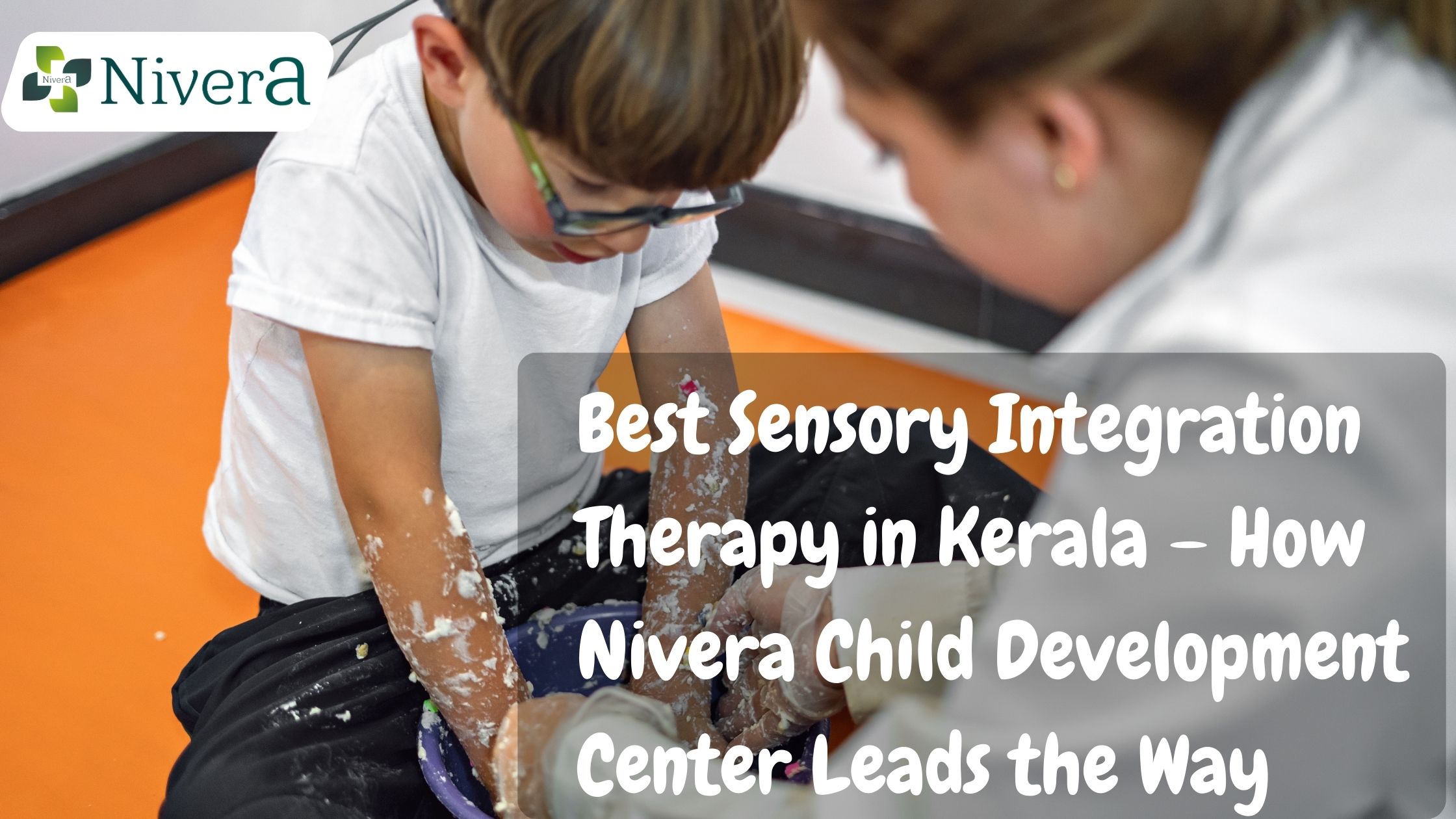
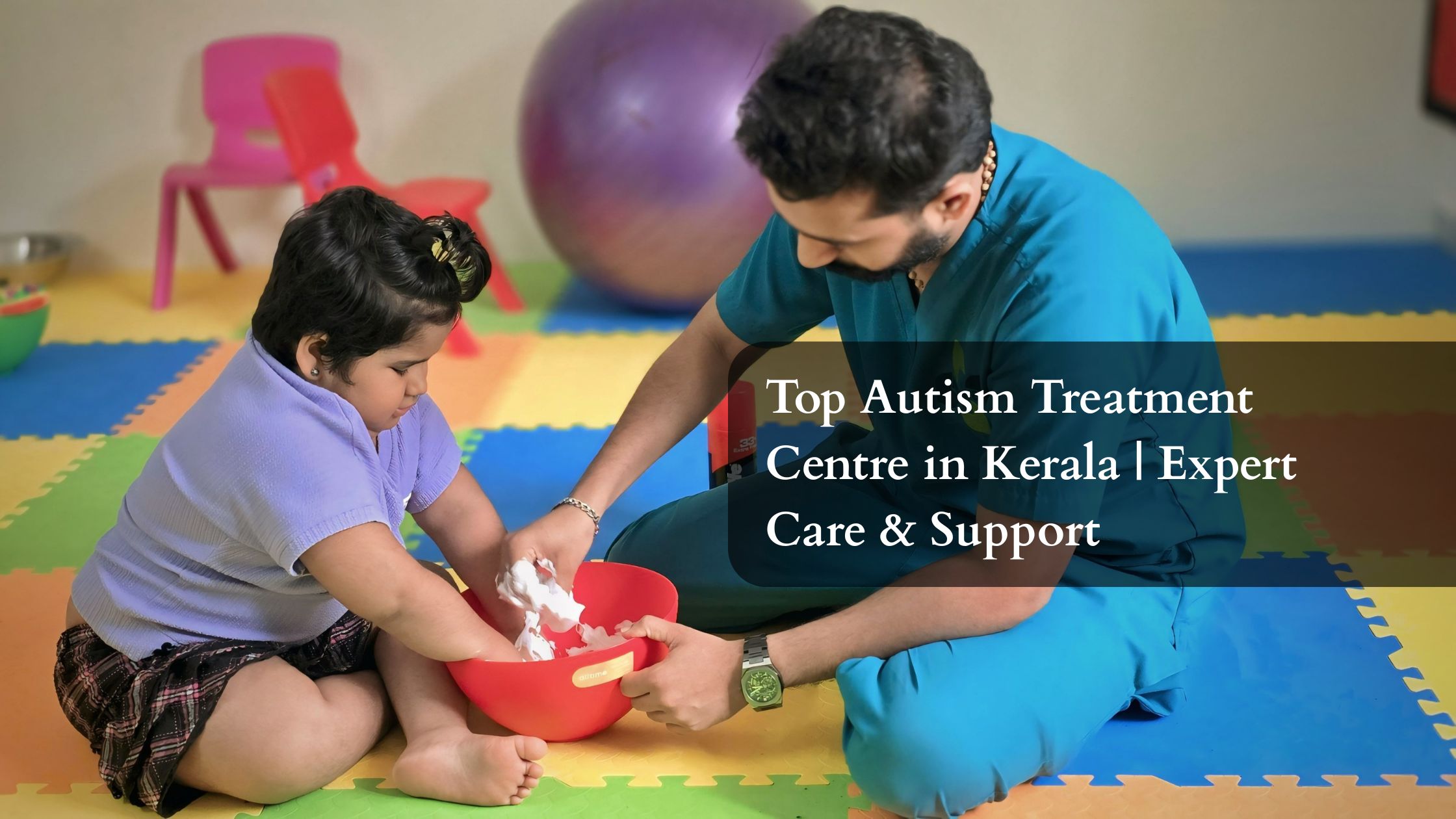
Children experience the world through their senses — touch, movement, sound, sight, taste, and body awareness. When these senses do not work together smoothly, everyday activities like dressing, playing, learning, socializing, or even sitting still can become difficult.  This condition is known as Sensory Processing Disorder (SPD) or sensory integration difficulties.In Kerala, especially Kochi, sensory integration therapy has become one of the most effective and widely recommended approaches to help children overcome these challenges. This blog explains what sensory integration therapy is, how it works, signs your child may need it, and why Kochi is emerging as a hub for high-quality therapy. What Is Sensory Integration Therapy? Sensory Integration Therapy (SIT) is a therapeutic approach designed to help children respond to sensory input in a more organized, calm, and meaningful way. It was developed by occupational therapist Dr. A. Jean Ayres. The therapy uses structured, play-based activities to help the brain process and understand sensory information better. These activities often include: Swinging Balancing tasks Climbing Deep pressure activities Trampoline exercises Sensory bins Obstacle courses Tactile play (sand, clay, textures) The goal is to help the child develop body awareness, regulate emotional responses, and improve daily functioning. Signs Your Child May Need Sensory Integration Therapy Parents often observe early signs at home or school. Your child may benefit from SI therapy if they Over-Sensitive (Hypersensitive) Difficulty with writing, buttoning, zipping Poor balance Trouble using cutlery Often fall or trip Social & Emotional Challenges Tantrums triggered by sensory overload Difficulty adjusting to new environments Trouble with transitions Avoiding or dominating play Constantly touch everything Motor & Coordination Challenges Cover ears for normal sounds Avoid haircuts, brushing, bathing, certain fabrics Resist hugs, touch, or grooming Fear swings, slides, or climbing Under-Sensitive (Hyposensitive) Seek strong movement — spinning, jumping, climbing Crash into people or objects Chew on clothes or objects Show high pain tolerance Constantly touch everything School Challenges Difficulty sitting still Inattention or daydreaming Poor handwriting Difficulty following instructions Early intervention with sensory integration therapy can create lasting improvements. How Sensory Integration Therapy Works Sensory integration therapy in Kochi commonly follows the Ayres Sensory Integration (ASI) approach. The child works with a trained occupational therapist (OT) in a dedicated sensory gym. A typical session includes: Assessment The therapist evaluates sensory responses, motor skills, balance, coordination, emotional regulation, and functional skills. Personalized Therapy Plan Activities are customized to the child’s sensory profile — whether they are sensory seekers, avoiders, or mixed. Play-Based Sensory Activities Children never feel like they are “doing therapy.” Instead, they play using structured tasks designed to challenge and develop sensory processing. Parent Training Parents learn how to support sensory regulation at home through simple strategies and routines. Progress Monitoring Goals such as improved attention, better behavior, smoother coordination, or emotional control are tracked over time. Benefits of Sensory Integration Therapy Parents in Kochi have seen remarkable improvements in children after consistent SI therapy. Benefits include: Better attention and focus Improved school performance Reduction in meltdowns and emotional outbursts More confidence in social situations Better handwriting and fine motor skills Improved balance and body awareness Reduced sensory sensitivity Smoother eating, grooming, and dressing routines Increased willingness to try new activities Better sleep patterns Independent daily functioning Sensory integration therapy helps children become calmer, happier, and more connected to the world around them. Why Kochi, Kerala Is Becoming a Sensory Integration Therapy Hub Kochi has rapidly grown into one of Kerala’s top cities for child development services. Parents prefer SI therapy in Kochi because: Availability of certified occupational therapists Modern sensory gyms with high-quality equipment Evidence-based therapy approaches Multidisciplinary centers integrating OT, speech therapy, psychology, and physiotherapy Kerala’s supportive culture for early intervention Affordable therapy options compared to metro cities Strong parent support and awareness Centers in Kochi also follow personalized therapy models, offering one-on-one care for better outcomes. Who Can Benefit from Sensory Integration Therapy? SI therapy is beneficial for children with: Sensory Processing Disorder (SPD) Autism Spectrum Disorder (ASD) ADHD / Hyperactivity Global Developmental Delay Feeding and tactile sensitivity Learning Disabilities Down Syndrome Speech Delay Cerebral Palsy Poor coordination Behavioral challenges What Parents Can Do at Home Therapists may recommend simple activities such as: Deep pressure massages Joint compressions Swinging Jumping on a mattress Sensory bins Brushing protocols (only if trained) Heavy work activities (pushing/pulling tasks) These help maintain regulation between therapy sessions. Sensory Integration Therapy is a powerful, evidence-based approach that helps children understand their sensory world better and function with greater ease. For families in Kochi and across Kerala, accessing quality SI therapy can be life-changing — improving academic performance, emotional health, social engagement, and daily routines. With skilled therapists, dedicated centers, and growing awareness among parents, Kochi continues to be one of the best places in Kerala for sensory integration support. What is Sensory Integration Therapy? It is a therapy approach that helps children process and respond to sensory information—like touch, sound, and movement—more effectively. It is widely used for children with SPD, autism, ADHD, and developmental delays. How do I know if my child needs sensory integration therapy? If your child is overly sensitive, constantly seeking movement, has poor coordination, frequent meltdowns, or difficulty focusing, an occupational therapist can evaluate for sensory issues. Is Sensory Integration Therapy available in Kochi, Kerala? Yes. Kochi has trained occupational therapists, sensory gyms, and multidisciplinary centers offering structured SI therapy for children. What happens during a sensory integration therapy session? Sessions include activities like swinging, jumping, balancing, and deep-pressure games that help regulate sensory responses and improve daily functioning. Is SI therapy helpful for autism and ADHD? Yes. Sensory integration therapy helps reduce sensory overload, improve attention, support emotional regulation, and boost social interaction in children with ASD and ADHD.
Read More
schools for autistic children kochi
Inclusive Education Begins with Understanding Every child deserves an environment where they can learn, express, and grow freely. For children on the autism spectrum, traditional classrooms can sometimes feel overwhelming or unaccommodating. That’s where specialised schools for autistic children come in — environments designed to nurture, guide, and empower children through structure, patience, and personalised teaching methods. At Nivera Child Development Centre, located in Kumbalam, Kochi, we believe that every child learns differently. Our mission is to create a learning space that respects these differences while fostering communication, confidence, and independence. As one of the leading centers in Kochi providing educational and therapeutic support for children with autism, Nivera bridges the gap between therapy and schooling — helping every child achieve meaningful progress in their developmental journey. A School That Understands Autism Autism Spectrum Disorder (ASD) affects the way a child communicates, interacts, and processes information. Many children with autism find it difficult to adapt to typical classroom settings that demand quick transitions, group learning, or strict routines. The right school, however, can make a remarkable difference. Nivera’s specialised school program in Kochi provides a safe, supportive, and structured environment tailored to the unique needs of autistic children. Here, learning isn’t rushed—it’s personalised. Our educators and therapists understand that attention spans, communication patterns, and sensory preferences differ for each child. Through gentle guidance, play-based learning, and consistent integration of therapy, we help children engage with academics, develop social understanding, and enjoy learning at their own pace. Holistic Learning at Nivera Child Development Centre At Nivera, education is not limited to books or blackboards. We focus on functional learning — helping children build the skills they need in daily life. Lessons are designed around the child’s developmental level, incorporating structured teaching methods, sensory breaks, and visual supports to make learning enjoyable and effective. Our team includes special educators, occupational therapists, speech-language pathologists, behavior therapists, and child psychologists, all working collaboratively. Together, they create an individualised learning plan (ILP) for each child, ensuring a balance of academics, therapy, and social training. Language and communication development are at the heart of our program. Through speech therapy and social skills sessions, children learn how to express needs, interact with peers, and respond appropriately in different settings. Meanwhile, occupational therapy improves focus, sensory regulation, and fine motor coordination, allowing children to better participate in classroom activities. From Therapy to Learning: The Nivera Approach What makes Nivera stand out among schools for autistic children in Kochi is its integrated approach. We don’t separate therapy and education — we blend them. Every day at Nivera is structured around both learning and therapy goals. This ensures that children develop communication, social behavior, and academics together, creating a strong foundation for long-term success. Our therapists closely observe each child’s progress and adapt the curriculum to their evolving needs. This dynamic model not only supports their learning but also boosts their confidence. Over time, many of our children have transitioned successfully into mainstream schools after completing our pre-inclusive program — a testament to Nivera’s commitment to inclusive education. Pre-Inclusive School Program: Preparing for the Future The Pre-Inclusive School Program at Nivera is designed for children with autism who are preparing to enter mainstream schools. The program teaches classroom readiness skills such as sitting tolerance, attention span, following instructions, sharing space with peers, and managing transitions between activities. In addition, children participate in structured play and group learning sessions that help them understand social norms and teamwork.  By gradually building these skills in a low-stress environment, children become more confident and prepared to join inclusive or regular school systems. Parents in Kochi often choose Nivera because our pre-inclusive training acts as the perfect stepping stone toward successful integration. Parents as Partners in the Journey At Nivera, we believe that parents are the strongest allies in a child’s developmental progress. We offer regular parent counselling, home-activity guidance, and open feedback sessions to ensure families are equipped to continue learning at home.  Parents are encouraged to participate in therapy sessions and review meetings so that they can see progress firsthand and learn strategies to reinforce positive behaviours outside school hours. This partnership builds trust, consistency, and emotional support for the child, making the rehabilitation process much more effective.  For families seeking autism support in Kochi, Nivera provides not only professional therapy but also a compassionate community that truly understands their journey. Why Nivera is the Best Choice in Kochi for Autism Education Nivera Child Development Centre in Kumbalam, Kochi, stands apart for its commitment to personalised care and evidence-based education.  Located conveniently near Thevara, Panangad, Nettoor, and Maradu, the centre serves families across Ernakulam who seek both therapy and schooling in one place. Our safe, sensory-friendly classrooms, experienced therapists, and child-centred teaching methods create an environment where autistic children feel understood and valued.  We focus on progress over perfection — celebrating every milestone, however small. Families who join Nivera don’t just find a school; they find a team of experts dedicated to helping their child thrive. vision for your kid A Brighter Tomorrow for Every Child Autism doesn’t define a child — their potential does. At Nivera Child Development Centre, we focus on unlocking that potential through structured education, specialized therapies, and endless care. Our vision is to provide children with autism the opportunity to learn joyfully, express freely, and live confidently. If you’re looking for the best school for autistic children in Kochi, Nivera is here to walk beside you every step of the way — guiding, teaching, and celebrating every success along your child’s journey. Book your Consultation Frequently Asked Questions What is a school for autistic children? A school for autistic children is a specialized educational environment that caters to the learning and developmental needs of children with Autism Spectrum Disorder (ASD). These schools focus on building communication, social, and behavioral skills through structured learning and therapy-based programs. At Nivera Child Development Centre in Kochi, our curriculum integrates both academics and therapy to help children learn at their own
Read More
As a parent, ensuring your child receives the best care and support is always a top priority. Choosing the right therapy center can make a significant difference in your child’s development, confidence, and overall well-being. From occupational therapy for children to speech therapy for kids and physiotherapy for children, high-quality care can help your child reach their full potential. Why Choosing the Right Therapy Center Matters A pediatric therapy center provides specialized services tailored to children’s needs. Whether your child requires early intervention services or behavior therapy, selecting a center that offers comprehensive child therapy services ensures the right guidance and support. The best centers provide an individualized approach, helping children develop essential skills while fostering a positive, encouraging environment. How to Choose the Best Therapy Center for Your Child When looking for a child therapy center, parents should consider several factors: Quality of Care for Children – Ensure the center prioritizes quality care for children, with experienced and certified therapists. Comprehensive Therapy Services – Look for centers offering multiple services like occupational therapy, speech therapy, physiotherapy, sensory integration therapy, and behavior therapy services. Early Intervention Programs – Centers with early childhood intervention programs can make a significant impact on development, especially for children with special needs. Parent Involvement and Guidance – A good center guides parents with advice and resources, making it easier to support your child’s progress at home. Reputation and Trust – Seek recommendations from other parents or professionals to find a trusted therapy center for kids. Benefits of High-Quality Child Therapy Services Enrolling your child in a best therapy center for children offers several advantages: Improved Child Development – Targeted therapy helps children strengthen motor skills, language abilities, and cognitive functions. Customized Programs – Individualized plans ensure therapy meets your child’s unique needs. Confidence and Independence – Children gain skills and self-assurance in daily activities. Early Support for Special Needs – Special needs therapy centers can provide early intervention for children requiring extra support. Tips for Parents Ask about pediatric developmental support services. Check if the center offers affordable child therapy services without compromising quality. Look for programs that include occupational, speech, physiotherapy, and sensory integration therapy. Ensure therapists provide expert child therapy guidance and ongoing progress updates. Conclusion Every child deserves the best care to thrive. By choosing the right therapy center for kids, parents can ensure their child receives high-quality services tailored to their developmental needs. From early intervention services to comprehensive child rehabilitation services, the right center provides support, encouragement, and expertise that makes a lifelong difference. Invest in your child’s future today by selecting a trusted therapy center for kids that prioritizes their growth, learning, and well-being. Your child deserves nothing less than the best.
Read More
Sensory Integration Therapy in Kerala
Introduction: Building a Strong Sensory Foundation for Your Child When a child struggles to respond appropriately to the world around them — loud sounds, bright lights, certain textures, movement — it can affect everything from learning to behavior to social interactions. This challenge, known as Sensory Processing Disorder (SPD) or sensory integration difficulties, is common in children with autism, ADHD, developmental delays, and learning disabilities. Sensory Integration Therapy (SIT) is an evidence-based approach that helps the brain organize and respond to sensory information in a meaningful way.If you’re looking for the best sensory integration therapy in Kerala, one name stands out — Nivera Child Development Center, Kumbalam, Kochi. At Nivera, we blend modern occupational therapy, sensory gym activities, and traditional Ayurvedic wellness to offer a unique, holistic approach that supports every aspect of your child’s development. Understanding Sensory Processing and Why It Matters Our senses — touch, vision, hearing, taste, smell, movement (vestibular), and body awareness (proprioception) — constantly send information to the brain.For most children, the brain organizes these signals smoothly. But for children with sensory integration challenges, these signals can feel like either too much (hypersensitivity) or too little (hyposensitivity). Common Signs of Sensory Processing Challenges Extreme sensitivity to textures, clothing tags, or food consistencies Difficulty tolerating loud sounds or bright lights Unusual seeking of movement — spinning, jumping, running excessively Poor balance or frequent clumsiness Avoiding messy play (sand, paint, clay) Difficulty focusing in noisy environments Emotional outbursts triggered by sensory overload Without proper intervention, these challenges can affect learning, communication, social skills, and daily living. Why Nivera Child Development Center is Kerala’s Top Choice Nivera Child Development Center in Kumbalam, Kochi is more than just a therapy facility — it’s a complete developmental hub for children with special needs. We specialize in Sensory Integration Therapy in Kerala with a state-of-the-art sensory gym and a multidisciplinary team of occupational therapists, speech therapists, physiotherapists, educational therapists, and Ayurvedic doctors. What Sets Nivera Apart Personalized Sensory Plans – Every child undergoes a detailed sensory profile assessment before starting therapy. Multisensory Gym Equipment – Swings, trampolines, textured mats, climbing walls, and balance boards. Ayurveda + Modern Integration – Unique to Nivera, we use Ayurvedic therapies (massage, herbal oils) to support sensory regulation. Parent Training – We empower families with home-based sensory activities for continued progress. Early Intervention Expertise – We cater to children as young as 18 months for maximum developmental gains Sensory Integration Therapy Techniques at Nivera We use a variety of evidence-based techniques tailored to each child’s needs: Tactile Activities Sand play, water play, clay modeling, textured toys Improves tolerance to different surfaces and reduces touch sensitivity Vestibular (Movement) Therapy Swings, rocking boards, spinning activities, and obstacle courses Enhances balance, coordination, and spatial awareness Proprioceptive Input Weighted vests, pushing/pulling activities, heavy work tasks Helps calm hyperactive children and improves body awareness Sensory Diets Customized daily activity plans combining movement, tactile, and deep-pressure input to maintain regulation throughout the day Therapeutic Listening Specially designed auditory programs to improve attention, focus, and auditory processing Ayurvedic Relaxation Therapy Gentle massage with herbal oils to reduce anxiety and sensory defensiveness Conditions We Support with Sensory Integration Therapy At Nivera Child Development Center, we successfully help children with: Autism Spectrum Disorder (ASD) Attention Deficit Hyperactivity Disorder (ADHD) Sensory Processing Disorder (SPD) Developmental Delays Learning Disabilities Speech and Language Delays Cerebral Palsy (with sensory modulation needs) Why Parents Across Kerala Choose Nivera Location Advantage – Easily accessible from anywhere in Kochi and nearby districts. Multidisciplinary Care – All therapies under one roof: occupational, speech, physiotherapy, educational therapy, Ayurveda. Evidence-Based Practice – Techniques backed by the latest research in sensory processing. Child-Friendly Environment – Colorful, engaging, and safe spaces designed to encourage exploration and play. Proven Results – Many parents report improved attention, reduced meltdowns, and better social skills within months Other Sensory Integration Therapy Centers in Kerala While Nivera Child Development Center is a leader, Kerala also has other therapy centers offering sensory integration services, including: Blossom Valley Therapy Centre (Kochi) IAN Institute of Rehabilitation & Research (Thrissur) Miracle Early Intervention Clinic (Aluva) KIMS Health (Thiruvananthapuram) Nivera CDC (Thiruvananthapuram) Success Story “Our son Avinik  was diagnosed with sensory processing disorder and autism at age 4. He couldn’t tolerate loud noises or wearing certain clothes. After just 3 months at Nivera, his ability to handle different textures improved, he started playing with other kids, and his meltdowns reduced drastically. We can’t thank the therapists enough!” – Parent  Neethu Akhil from Ernakulam How to Start Sensory Integration Therapy at Nivera Contact Us – Call or WhatsApp our reception. Initial Assessment – Comprehensive sensory profile evaluation. Custom Therapy Plan – Tailored activities for your child’s needs. Regular Progress Review – Continuous monitoring and updates. Address: Nivera Child Development Center, Kumbalam, Kochi, Kerala Phone: 9605152749, 9539448777 Website: www.niveracdc.com Frequently Asked Questions (FAQ) What is the best age to start sensory integration therapy?Early intervention is ideal, preferably between 2–6 years, but older children also benefit greatly. How often should my child attend sessions?Most children benefit from 2–3 sessions per week, but the plan is personalized. Can SIT help with attention and focus issues?Yes, improving sensory regulation often enhances attention span and learning ability. Does Nivera provide therapy for adults with sensory challenges?Yes, our therapists also work with adolescents and adults when needed. Is sensory integration therapy covered by insurance?It depends on your insurance provider; we can assist with documentation.
Read More
Understanding Autism Spectrum Disorder Autism is not a one-size-fits-all condition. Each child with autism has unique strengths and challenges. The condition usually appears in early childhood and is characterized by difficulties in: – Social interactions – Verbal and non-verbal communication – Repetitive behaviors – Sensory sensitivities   That’s why finding a specialized autism center in Kochi that understands these individual differences is crucial. Why Choose a Dedicated Autism Treatment Center in Kochi? Kochi is emerging as a hub for quality healthcare and therapeutic services. A number of autism therapy centers in Kochi now provide evidence-based interventions, early diagnosis, and personalized treatment plans for children with autism.   Benefits of choosing a specialized center: – Access to multidisciplinary therapies (Speech, Occupational, Behavioral, Sensory Integration) – Early intervention programs – Parent counseling and training – Individualized Education Plans (IEPs) – Regular monitoring and progress assessments Key Services Offered by the Best Autism Centers in Kochi When looking for the best autism treatment center in Kochi, ensure it offers a range of services tailored to children on the spectrum. Speech Therapy for Autism in Kochi Children with autism often struggle with verbal and non-verbal communication. Speech therapy for autism Kochi focuses on: – Improving speech clarity and vocabulary – Enhancing social communication – Using Augmentative and Alternative Communication (AAC) when needed Occupational Therapy for Autism Kochi Occupational therapy for autism in Kochi helps children develop skills for daily living, such as: – Motor coordination – Sensory processing – Independence in grooming, dressing, and eating Behavioral Therapy (ABA Therapy Kochi) Applied Behavior Analysis (ABA) is one of the most effective therapies for autism. It helps reduce problem behaviors and teaches positive skills. A good autism center in Kochi should have trained ABA therapists. Sensory Integration Therapy Kochi Children with autism often have sensory sensitivities (e.g., to sound, touch, or lights). Sensory integration therapy in Kochi helps regulate sensory input and improves focus, behavior, and participation. Special Education and Early Intervention Early intervention for autism Kochi plays a vital role in brain development. The earlier the therapy begins, the better the outcomes. Special education programs focus on: – Academic readiness – Social skills training – Cognitive development How to Choose the Right Autism Clinic in Kochi Here’s a checklist to help you select the top-rated autism center in Kochi: – Certified and experienced therapists – Multidisciplinary approach – Parent involvement in therapy – Clean, safe, and child-friendly environment – Regular assessment and feedback – Positive reviews from other parents Affordable Autism Therapy in Kochi: Is It Possible? Many parents worry about the cost of therapy. The good news is that several affordable autism therapy centers in Kochi now provide packages or subsidized programs. Some even offer free evaluations or government-linked support for eligible families. Holistic and Ayurvedic Treatment for Autism Kochi Some centers combine Ayurvedic treatment for autism in Kochi with modern therapy techniques. Ayurveda can help manage hyperactivity, improve sleep, and enhance digestion and brain function. Always consult with both pediatricians and Ayurvedic experts before starting such treatments. Why a Multidisciplinary Autism Rehabilitation Center in Kochi Matters An effective autism rehabilitation center in Kochi will bring together various specialists, such as: – Speech-language pathologists – Occupational therapists – Behavioral therapists – Special educators – Pediatricians – Psychologists   This collaborative approach ensures all aspects of your child’s development are addressed. Popular Locations for Autism Centers in Kochi Autism centers are spread across Kochi, including: – Edappally – Vyttila – Kaloor – Kundanoor – Edakochi – Paluruthi – Thrippunithura These areas offer autism centers near me in Kochi with easy access and parking for parents. Parent Training & Support Services The best autism centers don’t just treat the child—they empower the family. Look for centers that offer: – Counseling and training for parents – Home-based therapy guidance – Peer support groups – Regular feedback and progress reports What Makes a Center the Best Autism Treatment Center in Kochi? Here are the top qualities to look for: – High success rate and parent satisfaction – Qualified therapists with autism specialization – Friendly staff and stress-free environment – Affordable pricing and flexible schedules – Comprehensive treatment under one roof Frequently Asked Questions (FAQs) Q1: At what age can autism be diagnosed? Autism can be reliably diagnosed as early as 18–24 months. Early signs may appear even before that. The sooner the diagnosis, the better the outcomes through early intervention.   Q2: How long does autism therapy take? Therapy duration depends on the child’s needs and progress. Many children require long-term intervention, while others may show improvement within months of consistent therapy.   Q3: What is the cost of autism therapy in Kochi? Costs vary based on services and frequency. Some centers offer affordable autism therapy in Kochi starting from ₹500/session, while others have monthly packages.   Q4: Can autism be cured completely? Autism is a lifelong condition. However, with the right therapy and support, children with autism can lead fulfilling, independent lives.   Q5: Are there any autism centers in Kakkanad or Edappally? Yes, several autism centers in Kakkanad and Edappally offer top-quality services. Always check reviews, visit the facility, and speak to the therapists before enrolling. Conclusion: Hope Begins Here Finding the best autism treatment center in Kochi can feel overwhelming at first, but with the right information and support, you can make a confident decision. Look for a center that treats your child as unique, involves you in the journey, and offers a wide range of therapies under one roof.
Read More
Autism treatment-centre in kerala
Introduction: Understanding Autism and the Need for Early Intervention Autism Spectrum Disorder (ASD) is a developmental condition that affects communication, behavior, and social interaction. While it is a lifelong condition, early diagnosis and the right treatment can make a significant difference in improving a child’s abilities and independence. In Kerala, there has been a remarkable growth in specialized autism treatment centers, offering world-class therapies that cater to the needs of children and families. Among these, Nivera Child Development Center in Kochi has emerged as a trusted name, providing a holistic range of therapies designed to support children on the autism spectrum. Why Kerala is Becoming a Hub for Autism Treatment Kerala is increasingly being recognized for its advanced therapy centers, skilled therapists, and integrative treatment approaches. Several factors make Kerala a preferred destination: Highly trained therapists with experience in modern and traditional treatment methods. Comprehensive therapy centers offering speech, occupational, behavior, sensory, and physiotherapy under one roof. Integration of Ayurveda with modern therapies for a holistic approach. Parent-friendly culture that emphasizes active involvement in treatment. Comprehensive Autism Treatment at Nivera Child Development Center At Nivera Child Development Center, Kochi, treatment is tailored to the unique needs of every child. Our approach is multi-disciplinary, ensuring that each child receives the right combination of therapies. 1. Speech Therapy Speech therapy focuses on helping children with autism improve communication, whether verbal or non-verbal. At Nivera: Children work on articulation, vocabulary, and sentence formation. Therapists use play-based techniques to make sessions engaging. Augmentative and Alternative Communication (AAC) tools are introduced when necessary. 2. Occupational Therapy Occupational therapy helps children develop skills for daily living, education, and social interaction. At Nivera: Activities improve fine motor skills, hand-eye coordination, and self-care abilities. Sensory integration is included to address sensory sensitivities. Customized activities help children gain independence in everyday life. 3. Behavior Therapy Behavior therapy, especially Applied Behavior Analysis (ABA), is essential for managing challenging behaviors and teaching social skills. At Nivera: Therapists work on reducing unwanted behaviors and reinforcing positive ones. Social stories and structured routines are used to improve adaptability. 4. Sensory Integration Therapy Many children with autism experience sensory processing difficulties. Sensory integration therapy at Nivera: Uses specially designed activities to help children respond appropriately to sensory input. Improves focus, calmness, and participation in daily activities. 5. Ayurveda Integration Kerala is known for its traditional Ayurvedic treatments, which are used at Nivera alongside modern therapies: Specialized Ayurvedic massages support relaxation and improve muscle tone. Herbal therapies aim to enhance cognitive and physical well-being. All treatments are personalized and performed under professional guidance. Why Choose Nivera Child Development Center Parents across Kerala and even from other states trust Nivera because: Multi-disciplinary team of certified therapists. Customized therapy plans for each child. Parental training and guidance to continue therapy at home. Child-friendly environment that encourages learning through play. Success Story: A Parent’s Experience “When we brought our son Avinik to Nivera, he was three years old and had very limited speech. He struggled with social interaction and daily tasks. Within a year of consistent speech, occupational, and behavior therapy, Avinik began using words, playing with other children, and showing independence. The progress has been beyond what we imagined. We are deeply thankful to the Nivera team.” — Avinik ’s parents, Kochi Stories like Avinik ’s inspire us to keep working with dedication and compassion. Q&A Section Q1: What is the right age to start autism therapy?The earlier, the better. Early intervention (as young as 18 months) can greatly improve a child’s development. Q2: Can autism be cured?Autism is not a disease to be cured, but with the right therapies, children can develop skills to lead more independent and fulfilling lives. Q3: How long does therapy take?The duration varies for each child. Some show improvement within months, while others need ongoing support for several years. Q4: Do parents need to be involved in therapy?Yes! At Nivera, we believe parental involvement is key to success. Parents are guided to practice activities at home. Conclusion Autism treatment in Kerala has advanced significantly, with centers like Nivera Child Development Center in Kochi offering personalized, holistic, and effective care. By combining modern therapies with Kerala’s Ayurvedic heritage, Nivera ensures that every child receives the best possible support to grow, learn, and thrive. If you are searching for a trusted autism treatment center in Kerala, Nivera is here to guide you and your child every step of the way.
Read More
Developmental Delays in Children
As a parent, you are the first to notice changes in your child’s behavior, growth, and learning. While every child develops at their own pace, certain delays in physical, speech, emotional, or social development may signal the need for early intervention. Understanding the early signs of developmental delays empowers parents to seek timely help and improve long-term outcomes. In this blog, we will explore 10 key warning signs of developmental delays in children, along with insights into early diagnosis, therapies like speech therapy, occupational therapy, behavior therapy, and how child development centers can support your journey. What is Developmental Delay? Developmental delay refers to when a child does not reach their developmental milestones within the expected age range. These milestones may involve: Motor skills (physical development) Speech and language development Cognitive development (thinking and learning) Social and emotional development It’s important to remember that a delay does not always mean a lifelong condition—it could be temporary. But early diagnosis and support from professionals can make a huge difference. Why Early Identification Matters Many parents believe “they’ll grow out of it,” but ignoring early warning signs can lead to deeper challenges in academics, communication, behavior, and self-care. Early therapy interventions such as speech therapy, occupational therapy, behavioral therapy, and special education support have shown proven results in bridging developmental gaps. 10 Early Signs of Developmental Delays in Children 1. Delayed Speech or Language Skills By 12 months, a child should use basic sounds or words like “mama” or “dada.” By 2 years, they should use simple two-word phrases like “want toy.” Lack of babbling, difficulty understanding words, or not responding to their name could be red flags. 2. Poor Eye Contact and Lack of Social Interaction A child who avoids eye contact, doesn’t smile socially by 6 months, or shows little interest in people might be struggling with social communication skills. These can be early signs of Autism Spectrum Disorder (ASD) or social development delay. 3. Lack of Interest in Playing or Imitation Children learn through play and imitation. If your child doesn’t enjoy peekaboo, pretend play, or copying sounds/actions by 18 months, it might indicate cognitive or social developmental delay. 4. Gross Motor Delay (Sitting, Crawling, Walking) Not sitting without support by 9 months or walking by 18 months can suggest gross motor delays. These may relate to muscle weakness, cerebral palsy, or neurological issues. 5. Fine Motor Skill Issues Difficulty holding objects, using a spoon, or picking up small items using thumb and finger may signal fine motor delay. Occupational therapy plays a vital role in strengthening hand-eye coordination and grip strength. 6. Sensory Processing Issues Does your child cover ears with normal sounds, avoid touching certain textures, or overreact to lights or smells? These signs may point to Sensory Processing Disorder (SPD) or sensory integration issues. 7. Behavioral Challenges Extreme tantrums, aggressive behavior, difficulty following instructions, or lack of impulse control could indicate behavioral or emotional developmental delays. Such behaviors may also be linked to ADHD, autism, or emotional regulation issues. 8. Lack of Response to Name or Sounds A child not responding to their name by 12 months or reacting inconsistently to sounds may have hearing issues or language processing delays. This may require audiological evaluation and speech-language therapy. 9. Delayed Learning and Problem-Solving Skills If your child struggles with puzzles, identifying objects, or following multi-step instructions, it could suggest cognitive developmental delay. Educational therapy and structured learning interventions help bridge these gaps. 10. Regression of Skills If a child loses previously acquired skills like talking, walking, or interacting, it’s a serious concern. Regression can be associated with neurological disorders, autism, or metabolic conditions and requires immediate medical attention. What to Do if You Notice These Signs? 1. Track Developmental Milestones Keep a milestone chart and note any delays. Consult a pediatrician or child development expert if you’re unsure. 2. Get a Professional Evaluation An early screening by a developmental pediatrician, psychologist, or therapist can help diagnose the condition. Common assessments include: Denver Developmental Screening Test (DDST) M-CHAT (for autism) Speech-language evaluations Occupational assessments 3. Start Early Intervention Early intervention includes a wide range of services based on the child’s specific needs. These may include: Speech Therapy – Improves communication skills. Occupational Therapy – Builds motor skills, sensory processing, and daily activity performance. Behavior Therapy – Helps manage emotional and behavioral challenges. Special Education – Personalized learning for academic delays. Physiotherapy – For motor weakness or movement disorders. How Can a Child Development Center Help? At Nivera Child Development Center, we specialize in early identification and intervention for children with developmental delays. Our multi-disciplinary team includes: Speech Therapists Occupational Therapists Physiotherapists Psychologists Special Educators Behavioral Therapists We offer tailored programs such as sensory integration therapy, pre-inclusive education, and parental guidance, all in a child-friendly, supportive environment. Keywords: best child development center, developmental therapy near me, early intervention program, Nivera Center, therapy for kids Tips for Parents Observe and trust your instincts – Parents are often the first to notice something’s not right. Avoid comparisons – Each child grows at their own pace, but trust milestones. Be proactive – Don’t wait. Early support can change your child’s developmental path. Create a supportive home environment – Talk, read, and play daily. Seek guidance – Connect with professionals, join parent communities, and stay informed
Read More
Early Intervention
When a child shows signs of developmental delays, behavioral issues, or learning difficulties, early intervention can make a profound difference in their life. Research consistently proves that early identification and timely support help children overcome challenges, build essential skills, and reach their full potential. At Nivera Child Development Center, we believe that starting interventions at the earliest stage can transform a child’s journey and open doors to a brighter future. In this blog, we will explore: What early intervention means Why it is crucial for a child’s development The long-term benefits of early intervention How therapies like speech therapy, occupational therapy, behavior therapy, and physiotherapy can help Real-life examples from our practice at Nivera What Is Early Intervention? Early intervention refers to specialized support and therapies provided to infants and young children who show developmental delays, disabilities, or are at risk of developmental challenges. It usually targets children from birth to 6 years of age—the most critical window for brain development. Early intervention services may include: Speech therapy Occupational therapy Behavior therapy Physiotherapy for children Special education support Parental guidance and counseling These services aim to enhance the child’s physical, cognitive, emotional, and social development. Why Early Intervention Matters: The Science Behind It The first six years of life are a period of rapid brain growth and adaptability. This is when a child’s brain forms new connections at an extraordinary rate. According to child development experts, the earlier a child receives intervention, the better the outcomes. Key Reasons Early Intervention Is Essential: Neuroplasticity is Highest in Early Childhood:The brain is most adaptable during early years, making it easier to acquire new skills and correct developmental pathways. Improves School Readiness:Children who receive early support tend to perform better in school, both academically and socially. Prevents Secondary Challenges:Without timely intervention, initial delays can lead to further problems like low self-esteem, social isolation, and emotional difficulties. Empowers Parents and Caregivers:Early intervention programs involve parents, helping them learn strategies to support their child effectively at home. Conditions That Benefit from Early Intervention Many childhood developmental concerns can significantly improve with early intervention, such as: Global Developmental Delay (GDD) Speech Delay and Language Disorders Autism Spectrum Disorder (ASD) Attention Deficit Hyperactivity Disorder (ADHD) Cerebral Palsy Sensory Processing Disorders Learning Disabilities Behavioral and Emotional Challenges At Nivera Child Development Center Kochi, we often see remarkable progress in children who start therapy early for these conditions. How Early Intervention Therapies Help Speech Therapy for Early Intervention Children with speech delays may struggle with expressive or receptive language. Speech therapy improves communication skills, vocabulary, pronunciation, and social interaction. Benefits: Develops verbal and non-verbal communication Improves social skills and peer interaction Enhances school performance Occupational Therapy for Child Development Occupational therapy helps children improve fine motor skills, sensory integration, self-care abilities, and coordination. Benefits: Supports independent daily activities Enhances handwriting and classroom participation Improves sensory processing and emotional regulation Behavior Therapy for Children Behavior therapy focuses on managing tantrums, aggression, attention issues, and social difficulties. Benefits: Reduces disruptive behavior Encourages positive social interactions Teaches coping strategies Physiotherapy for Children Children with physical delays, low muscle tone, or cerebral palsy can benefit greatly from pediatric physiotherapy. Benefits: Improves muscle strength, balance, and coordination Enhances mobility and independence Prevents future physical complications Long-Term Benefits of Early Intervention Starting early intervention has lifelong positive effects. Research shows that children who receive timely therapies: Achieve developmental milestones faster Require fewer special education services later in life Develop stronger social and emotional skills Build self-confidence and independence Experience improved family dynamics The Role of Parents in Early Intervention Parents are a crucial part of the early intervention process. At Nivera, we guide parents to: Identify developmental red flags early Actively participate in therapy sessions Apply therapy strategies at home Track their child’s progress with the help of professionals Tips for Parents: Trust your instincts; if you notice delays, don’t wait. Seek evaluation at a reputable child development center. Consistency at home can accelerate your child’s progress. Celebrate small improvements to motivate your child. Common Signs That May Need Early Intervention Here are some red flags that indicate the need for early assessment: By 1 year: Not responding to name, not babbling, no eye contact By 2 years: Not speaking meaningful words, not following simple instructions By 3 years: Poor social interaction, limited pretend play, speech not understandable Physical signs: Delayed sitting, crawling, or walking, poor muscle coordination Behavioral signs: Frequent tantrums, extreme sensitivity to sound or touch, inattentiveness If you observe these signs, consult a child development specialist in Kochi or nearby as soon as possible Why Choose Nivera Child Development Center for Early Intervention? At Nivera Child Development Center Kochi, we offer: Multidisciplinary therapy under one roof Customized therapy plans for each child Qualified therapists specializing in early intervention Family-centered approach with regular parental training Progress monitoring and continuous assessment We are committed to empowering children and their families by providing early support that truly transforms lives. Early Intervention Can Change the Future The earlier the intervention, the greater the chance to shape a child’s developmental path positively. Early support not only improves skills but also boosts a child’s self-esteem and confidence, making them capable of participating fully in school and society. If you have concerns about your child’s development, don’t delay. Early intervention is the key to unlocking your child’s potential. Contact Us: For expert evaluation and early intervention services in Kochi, reach out to Nivera Child Development Center.Phone: 9605152749Website: www.niveracdc.com
Read More
NIVERA-Child-Development Center Kochi
Choosing the right foundation for your child’s growth and development is one of the most important decisions you’ll make as a parent. At NIVERA Child Development Center in Kochi, we offer a comprehensive and compassionate environment where children—especially those with developmental needs—receive holistic care, education, and support. As a leading child development centre in Kochi, NIVERA integrates early intervention, therapy, preschool education, and parental support under one roof. This all-in-one approach makes us a preferred destination for parents seeking the best child development programs in Kochi. . Top 5 Benefits of Enrolling Your Child in a Development Centre in Kochi Early Detection and Intervention: Early identification of delays or disorders ensures timely support through therapy and individualized plans. Multi-disciplinary Approach: Services like speech therapy for children in Kochi, occupational therapy, and behavioral therapy are coordinated in-house. Structured Learning Environment: Children benefit from routines, play-based instruction, and consistent developmental activities. Parent Education and Support: We conduct parenting workshops in Kochi to equip caregivers with knowledge and tools. Socialization and Peer Learning: Children interact with peers, building emotional and social skills essential for development. Why Early Childhood Education Matters in Kochi Early childhood education in Kochi is gaining awareness as parents realize the importance of foundational learning years. At NIVERA, our curriculum blends structured learning with exploration, play, and therapeutic interventions. Early learning enhances brain development, fosters language acquisition, and improves readiness for formal schooling Finding the Best Preschool for special kids in Kochi: What to Look For Parents often ask, “How do I find the best preschool in Kochi?” At NIVERA, we recommend looking for: Qualified and experienced teachers Inclusive environment that supports all learners Low student-teacher ratio Focus on both academics and life skills Integrated support for children with developmental concerns Our preschool program meets all these criteria, making it a trusted choice for many families. Essential Childcare Services Every Parent Should Know About Childcare today is more than just supervision—it’s about nurturing the whole child. Our childcare services in Kochi include: Developmental assessments Nutritional guidance Therapeutic interventions (speech, occupational, behavioral) Early learning activities Parent counseling This comprehensive care ensures your child receives support in every area of development. Exploring the Advantages of Play-Based Learning for Kids Play-based learning in Kochi is becoming a preferred method of education because it allows children to explore, imagine, and learn at their own pace. At NIVERA, children learn numbers, language, motor skills, and social interaction through storytelling, music, art, and physical play. This form of learning nurtures curiosity and builds a strong educational foundation When to Seek Help from a Child Psychologist in Kochi Some children face emotional or behavioral difficulties that require professional support. If your child shows signs like extreme mood changes, withdrawal, aggression, or learning difficulties, it may be time to consult a child psychologist in Kochi. NIVERA offers on-site psychological evaluations, counseling, and behavior modification plans to support both children and parents. Fun Activities to Boost Your Preschooler’s Development 10 Parenting Tips for Raising Happy Kids in Kochi 1.     Encourage open communication 2.     Set clear and consistent boundaries 3.     Promote healthy eating and sleep routines 4.     Limit screen time 5.     Practice positive reinforcement 6.     Engage in shared playtime 7.     Involve children in simple household tasks 8.     Attend parenting workshops in Kochi for updated strategies 9.     Support your child’s interests Show unconditional love and patience How Speech Therapy Can Help Your Child in Kochi Many children struggle with delayed speech or articulation issues. Our speech therapy for children in Kochi helps improve: Pronunciation and fluency Vocabulary building Social communication Language comprehension Early speech therapy ensures your child can express themselves clearly and confidently. Understanding Developmental Milestones for Your Toddler Every parent wonders if their child is growing “normally.” Here are some common developmental milestones for toddlers: 12-18 months: Walking, pointing, using a few words 18-24 months: Combining words, simple pretend play 2-3 years: Following two-step directions, naming objects 3-4 years: Asking questions, hopping, simple storytelling Our team closely monitors these milestones and guides parents when there are delays. Navigating Special Needs Education: A Guide for Parents At NIVERA, we believe every child has the potential to succeed. Our special needs education in Kochi includes: Individualized Education Plans (IEPs) Inclusive classrooms with trained educators Therapy integration during the school day Family involvement and counseling We ensure that children with autism, ADHD, Down syndrome, and other conditions receive tailored support. Tips for Managing Your Child’s Behavior Effectively Child behavior management in Kochi at NIVERA includes: Consistency in routines and expectations Positive reinforcement techniques Visual schedules for predictability Behavior charts and reward systems Parent coaching to manage tantrums, defiance, or attention issues These methods help children feel secure and understood A Step-by-Step Guide to Preschool Registration in Kochi Preschool registration process in Kochi at NIVERA is simple and parent-friendly: Visit our center for a tour Meet with our educators and therapists Undergo a developmental screening (if needed) Fill out the application form Attend orientation sessions before starting We assist every step of the way to ensure your child transitions smoothly. . Top Educational Games for Kids That Boost Learning in Kochi We integrate the best educational games for kids in Kochi into our curriculum, such as:   Puzzle-solving for logical thinking Matching games for memory building Phonics apps for early literacy Counting games with beads or blocks Story sequencing cards for cognitive skills Why Social Skills Are Important for Your Child’s Growth From sharing toys to making friends, social skills are crucial. At NIVERA, we promote: Group play sessions Peer interaction exercises Conflict resolution strategies Role-playing to practice empathy and cooperation Children who develop strong social skills thrive in school and relationships How to Choose the Right Preschool for Your Child in Kochi When wondering how to choose a preschool in Kochi, consider: Curriculum quality Staff qualifications Clean and safe environment Child-to-teacher ratio Integration of therapies (if needed) Parent feedback and reviews   NIVERA ticks all these boxes and more, making it one of the most trusted preschools in the region. Nutrition
Read More
Open chat
Hello ????
Can we help you?