
Looking for ADHD support in Kochi? At Nivera Child Development Centre, we combine therapy and practical lifestyle strategies like daily exercise to improve attention, behaviour, and learning. Book a consultation today.

Children with ADHD are often full of energy, curious, and quick thinkers—but they may also struggle with attention, impulsivity, emotional control, and sitting still for learning tasks. While therapy, structured routines, and parent guidance play a major role, one powerful and natural support method is often underestimated: daily physical exercise.
At Nivera Child Development Centre in Kochi, Kerala, we work with children who have ADHD (Attention Deficit Hyperactivity Disorder) and other developmental concerns. One of the most practical lifestyle tools we recommend alongside therapy is consistent physical activity, because it supports both the body and brain.
In this blog, we’ll explain how exercise helps kids with ADHD, which activities are best, and how parents in Kochi and Kerala can build a simple daily routine.
Good posture provides a stable base for the hands to move smoothly. When a child sits correctly, the shoulder, arm, and wrist muscles work in coordination, allowing the fingers to control the pencil with less effort. Poor posture can lead to messy handwriting, slow writing speed, pain in the neck or back, and reduced attention in class.
A child who sits in an uncomfortable position may also show frustration, avoid writing tasks, and develop low confidence in school. Correcting posture early helps improve writing performance and prevents long-term musculoskeletal strain.

Daily exercise is not just “burning energy.” For children with ADHD, it directly supports brain functioning, especially in areas responsible for:
❇️ Attention and focus
❇️ Self-control
❇️ Working memory
❇️ Mood and motivation
❇️ Stress management
Regular physical activity helps balance important brain chemicals like dopamine, serotonin, and norepinephrine, which are strongly connected to ADHD symptoms. This is why many parents notice that their child becomes calmer, more organised, and more attentive after outdoor play or sports.

Exercise increases blood flow to the brain and improves alertness. Many children with ADHD show better concentration in school and during therapy sessions when they engage in physical activity daily. Even 20–30 minutes of movement can improve attention and learning readiness.
Hyperactivity is not “bad behaviour”—it’s often a child’s way of self-regulating. Exercise gives the body an appropriate outlet to release extra energy. When energy is used in a structured way, children may feel less restless and can sit for longer periods during class or homework.
Kids with ADHD can struggle with frustration tolerance, sudden anger, or emotional meltdowns. Exercise naturally reduces stress hormones and increases feel-good hormones. This helps children become emotionally calmer, more flexible, and better able to manage daily routines.
Executive functions are brain skills like:
❇️ planning
❇️ organising
❇️ self-monitoring
❇️ impulse control
Exercise improves these skills over time, especially activities that involve rules, coordination, and teamwork. Children learn to wait, follow steps, and stay engaged—skills that also help in school and therapy.
Many children with ADHD have difficulty falling asleep or staying asleep. Daily physical activity supports healthy sleep patterns by reducing restlessness and improving the body’s natural rhythm. Better sleep often leads to better behaviour, focus, and mood.
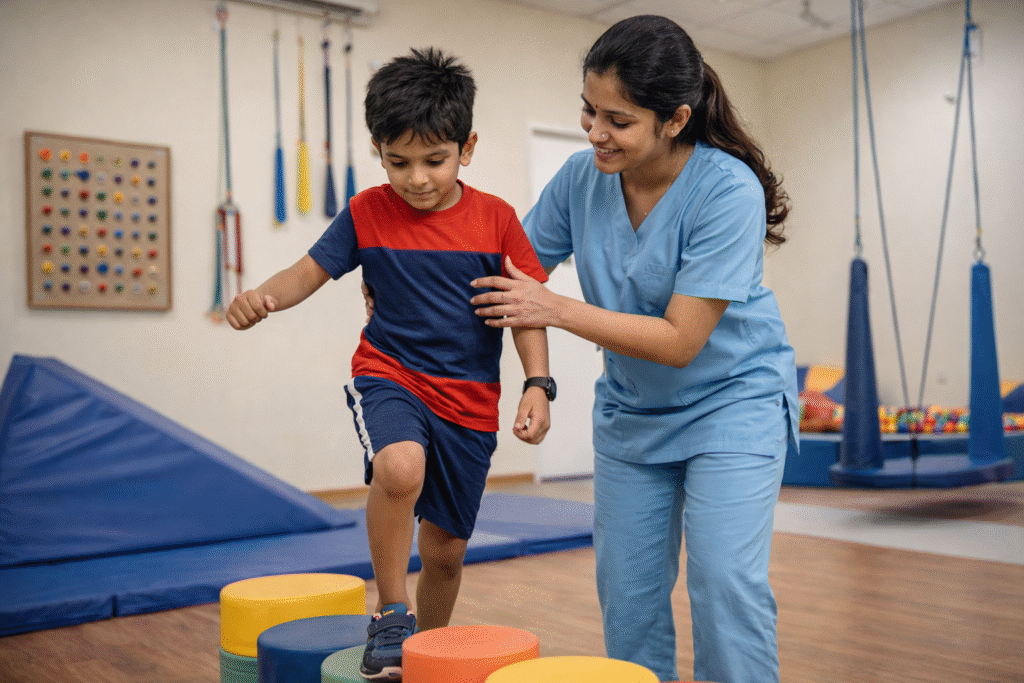
Some children with ADHD also have challenges with balance, coordination, posture, or fine motor control. Physical activity improves:
❇️ balance
❇️ core strength
❇️ body awareness
❇️ coordination
At Nivera, our therapists often integrate movement-based exercises to support overall development.
Sports and group activities help children learn:
❇️ turn-taking
❇️ cooperation
❇️ communication
❇️ self-confidence
When children feel successful in physical activities, it improves their self-esteem and reduces anxiety related to academics.

Not every activity suits every child. The best exercise is the one your child enjoys and can do consistently.
❇️ Cycling
❇️ Swimming
❇️ Skipping
❇️ Running / jogging
❇️ Dance or Zumba for kids
❇️ Martial arts (Karate, Taekwondo)
❇️ Yoga for children
❇️ Football / badminton / basketball
❇️ Obstacle courses
❇️ Yoga
❇️ Stretching routines
❇️ Breathing exercises with movement
❇️ Balance board games
❇️ Slow climbing activities
For most children, a healthy target is:
✅ At least 60 minutes of physical activity daily
This can be split into smaller sessions:
❇️ 20 minutes morning
❇️ 20 minutes evening
❇️ 20 minutes outdoor play
Even 30 minutes daily shows noticeable benefits when done consistently.

Here’s an easy routine that works well for many families:
Morning (10–15 mins)
Light jogging, skipping, jumping jacks, stretching
After school (30–45 mins)
Outdoor play, cycling, swimming, sports
Evening (10 mins)
Yoga poses + deep breathing
This structure helps reduce restlessness and improves readiness for homework and bedtime.
Exercise alone is helpful, but for long-term improvement, children benefit most when exercise is combined with therapies like:
✅ Speech therapy (if needed)
✅ Special education support
✅ Parent counselling and training
At Nivera Child Development Centre, Kochi, our team creates customised therapy plans for ADHD children in Kerala, including movement-based strategies for home and school.

Consider professional support if your child:
❇️ cannot sit even for short tasks
❇️ struggles academically despite effort
❇️ has frequent emotional meltdowns
❇️ shows aggressive or impulsive behaviour
❇️ has poor social interaction
❇️ has sensory processing issues
Early intervention makes a big difference.
Looking for ADHD support in Kochi? At Nivera Child Development Centre, we combine therapy and practical lifestyle strategies like daily exercise to improve attention, behaviour, and learning. Book a consultation today.
KOCHI, KERALA
Leave a Reply