Our Archive

Welcom to our archive

Drooling therapy for children at Nivera Child Development Centre in Kochi, Kerala, supporting better oral control, tongue strength, and confidence through pediatric therapy.
Written for Nivera Child Development Centre by the Occupational Therapy & Speech-Language Team Reviewed by: Occupational Therapy & Feeding Division, Nivera CDC, Kumbalam, Ernakulam This guide reflects how our therapists assess and support children with persistent drooling and oral-motor difficulties. Drooling is a normal part of babyhood, so most parents don’t give it much thought until it seems to go on too long. When a toddler or older child is still wet around the mouth and chin, with damp shirts, sore skin, and worried looks from relatives, it’s natural to wonder whether something is wrong. The good news is that persistent drooling is a well-recognised problem with practical, effective support. This guide explains why drooling continues, when it needs attention, and how drooling therapy helps children in Kochi and beyond. Is Drooling Normal in Children? Yes, up to a point. Babies drool because their swallowing skills and mouth muscles are still developing, and teething increases saliva and discomfort. Drooling usually reduces as children learn to close their lips, swallow more often, and control their tongue, generally by around eighteen months to two years. Many children still drool a little when tired, concentrating, or sick. Drooling that is heavy or constant after the age of about four is considered more than a typical phase and is worth having assessed, and earlier assessment is sensible if there are other developmental concerns. Why Do Some Children Keep Drooling? Most children who drool beyond the toddler years are not producing too much saliva. The usual issue is that they are not managing it efficiently. Common contributing factors include: Low muscle tone around the mouth. Weak or loose lips and cheeks make it harder to keep the mouth closed and hold saliva in. Open-mouth posture. Children who rest with their mouth open, sometimes because of a blocked nose, allergies, or enlarged tonsils or adenoids, lose saliva more easily. Reduced oral sensory awareness. Some children simply don’t feel the wetness on their lips and chin, so they don’t automatically wipe or swallow. Infrequent swallowing. Saliva builds up when a child doesn’t swallow often enough, especially while concentrating on play or screens. Poor head and trunk posture. A drooping head position makes it harder to control saliva. Neurological or developmental conditions. Drooling is more common in children with cerebral palsy, Down syndrome, global developmental delay, and some children with autism, because of differences in oral-motor control. Dental and medical factors. Teething, mouth sores, reflux, certain medicines, and some medical conditions can increase or worsen drooling. Why Persistent Drooling Matters Beyond the mess, ongoing drooling can affect a child’s skin, comfort, and confidence. Constantly wet skin around the mouth and chin can become red, sore, and cracked. Wet clothes and books are a daily nuisance. As children get older, drooling can lead to teasing or embarrassment, and for some it affects speech clarity and social participation. Importantly, drooling can sometimes signal that swallowing or mouth control needs attention, which is why a proper assessment is worthwhile. When to See a Doctor First Speak to a paediatrician promptly, in addition to seeking therapy, if your child: Coughs, chokes, or sounds wet and gurgly when swallowing saliva, food, or drink. Has repeated chest infections or breathing difficulties. Has a sudden increase in drooling that is new for your child. Has difficulty swallowing, refuses food, or is losing weight. Has a blocked nose, loud snoring, or mouth breathing that may point to tonsil, adenoid, or allergy problems. These signs can mean that saliva is not being swallowed safely, and they need medical review. Therapy can then run alongside medical care. How Drooling Is Assessed An occupational therapist or speech-language pathologist usually begins with a conversation about when the drooling happens, how long it has gone on, and what else your child finds difficult. The assessment then looks at: Posture and head control while sitting, playing, and eating. Lip closure, tongue movement, and jaw control at rest and during activity. Swallowing frequency and awareness, including whether your child notices wetness. Sensory responses inside and around the mouth. Eating and drinking skills, including chewing and straw use. This helps the team decide what is driving the drooling and whether a referral to a paediatrician, ENT specialist, or dentist is needed. What Does Drooling Therapy Involve? Drooling therapy is built around your child’s specific needs. It is usually gentle, playful, and practical, and it generally combines several strategies: Posture and positioning. Working on seating, head position, and trunk stability so the mouth can function better. Oral-motor and lip-closure activities. Games and exercises such as blowing bubbles, using whistles or horns, and drinking through a straw to strengthen lip closure and tongue control. Sensory awareness training. Helping your child feel and recognise wetness through varied textures, gentle touch cues, and play, so they begin to respond on their own. Swallowing reminders. Teaching children to swallow regularly through simple cues, visual prompts, and routines, which can be faded over time. Wiping and self-monitoring skills. Practising the habit of dabbing the mouth, supported by positive reinforcement and rewards. Eating and drinking practice. Encouraging chewing, closed-lip drinking, and a range of food textures to build oral strength and coordination. Home programme and parent coaching. Short, simple daily practice that fits into normal routines. Where medical causes are involved, a doctor may also discuss options such as medication, injections, or, rarely, surgery. These are medical decisions made with a specialist, and therapy typically continues alongside them. What Parents Can Do at Home Check posture. Encourage an upright, supported sitting position during play, meals, and screen time. Make it a game. Bubbles, straws, kazoos, and blowing activities build lip strength without feeling like therapy. Use gentle cues. A quiet phrase like “swallow” or a simple touch cue is more effective than scolding. Celebrate dry moments. Praise your child when they remember to close their lips or wipe their mouth. Protect the skin. Pat the skin dry rather than rubbing, and use a gentle barrier cream if redness appears. Treat
Read More
Feeding therapy for children to develop healthy eating habits with support from a pediatric therapist and parent.
Written for Nivera Child Development Centre by the Occupational Therapy & Speech-Language Team Reviewed by: Occupational Therapy & Feeding Division, Nivera CDC, Kumbalam, Ernakulam This page describes how our therapists assess and support children with feeding and mealtime difficulties. Mealtimes should be a time for nourishment and family connection. For many parents, they have become a daily struggle of refusals, gagging, tears, and worry about whether their child is getting enough to eat. At Nivera Child Development Centre in Kumbalam, Ernakulam, our feeding therapy programme supports children who find eating difficult, helping them build comfort, skill, and confidence around food, and helping parents bring calm back to the table. What Is Feeding Therapy? Feeding therapy is a specialised, therapist-led programme that helps children who have difficulty eating, drinking, chewing, or swallowing, or who have a very limited range of foods. It looks at the whole picture: the child’s sensory responses to food, the strength and coordination of the mouth, their medical and developmental background, and the mealtime environment at home. Sessions are play-based and child-paced, because children eat best when they feel safe, not pressured. Feeding therapy is different from simply encouraging a child to “try one more bite.” It is a structured process with clear goals, designed around why your child is struggling, not just what they refuse. Signs Your Child May Need Feeding Therapy Many toddlers go through fussy phases. Feeding therapy is worth exploring when difficulties are more persistent or intense. You may want an assessment if your child: Eats a very narrow range of foods, often fewer than twenty, and refuses to try new ones for months. Gags, retches, or vomits at the sight, smell, or texture of certain foods. Refuses whole food groups or textures, such as anything lumpy, crunchy, or mixed. Has difficulty chewing or keeps food in the mouth, pockets it in the cheeks, or swallows food whole. Coughs or chokes often during meals, or has a wet or gurgly voice after drinking. Is still on bottles or purees well beyond the age when most children move to solids. Has mealtimes that cause significant distress for the child or the whole family. Is losing weight, growing slowly, or tiring easily at meals. These need medical review alongside any therapy. Conditions We Commonly Support Feeding difficulties can occur in any child, and they are more common in children with certain developmental needs. Our team regularly supports children with: Autism spectrum disorder: strong sensory preferences, rigid food routines, or distress with new foods. Sensory processing differences: heightened sensitivity to texture, taste, smell, temperature, or appearance. Developmental delay and Down syndrome: low oral muscle tone or delayed chewing and swallowing skills. Cerebral palsy and other motor conditions: difficulty coordinating the mouth for safe, efficient eating. Prematurity or early medical history: children who had tube feeding, reflux, or oral aversion in infancy. Speech and oral-motor difficulties: weak or uncoordinated tongue, lip, and jaw movement. Anxiety around food: fear of choking, vomiting, or trying anything unfamiliar. What Causes Feeding Difficulties? There is rarely a single cause. Feeding is one of the most complex things a child does, involving sensory processing, muscle strength and coordination, digestion, behaviour, and emotion all at once. A difficulty in any one area can disrupt the rest. Sensory sensitivity, oral-motor weakness, a past unpleasant experience such as choking or reflux, medical conditions, and mealtime pressure can all play a part, often together. This is why careful assessment matters: the right therapy depends on understanding the cause. How We Assess Feeding Difficulties Detailed feeding history. Which foods are accepted and refused, how your child reacts, how long this has been happening, and what mealtimes look like at home. Sensory profile. How your child responds to touch, texture, smell, and movement in daily life, since feeding challenges often reflect wider sensory patterns. Oral-motor evaluation. Checking strength, movement, and coordination of the lips, tongue, and jaw for chewing and swallowing. Observation at a meal or snack. Watching your child eat gives information that reports alone cannot. Safety and medical screening. We look for signs that need a paediatrician, gastroenterologist, or swallowing assessment, such as coughing with feeds, poor weight gain, or frequent chest infections, and refer promptly when needed. Our Approach to Feeding Therapy We use gentle, evidence-informed methods that respect your child’s pace, and we never force-feed or pressure a child to eat. Sessions are individual, and the approach is adapted to your child’s needs. It may include: Step-by-step food exposure. Children move gradually from tolerating a new food nearby, to touching, smelling, and exploring it, to tasting, with each step mastered before the next. Sensory play with food. Messy, low-pressure play with textures away from the table builds comfort before eating is expected. Oral-motor exercises and play. Activities that strengthen and coordinate the mouth to support chewing, tongue movement, and safe swallowing. Food chaining. Building from foods your child already accepts to similar new ones, changing one feature at a time such as shape, brand, or texture. Responsive mealtime strategies. Positive routines, seating and positioning, and calm, predictable structure that reduce anxiety around eating. Coordination with other therapies. Speech, behavioral, and sensory integration support can be combined where helpful, so goals stay aligned. The Role of Parents Progress looks different for every child and happens gradually. Early wins are often small and meaningful: tolerating a new food on the plate, a calmer mealtime, or one extra accepted food. Over time, many children widen their diet, chew more confidently, and eat with less distress. We set clear goals, review them with you regularly, and adjust the plan as your child grows. We will always be honest about realistic timelines for your child’s situation. Why Families Choose Nivera CDC Gentle, child-led therapy that builds trust before expecting results. A multidisciplinary team across occupational therapy, speech-language therapy, behavioral therapy, and counseling, under one roof. Individualised plans based on thorough assessment rather than one-size-fits-all programmes. Clear communication and parent coaching with regular progress reviews. A welcoming centre in
Read More
Understanding sensory processing, food exploration & mealtime challenges
Written for Nivera Child Development Centre by the Occupational Therapy Team Reviewed by: Occupational Therapy & Feeding Division, Nivera CDC, Kumbalam, Ernakulam The distinctions below reflect how our occupational therapists actually screen and assess feeding concerns referred to us by parents and paediatricians. “He’ll eat rice and one specific brand of biscuit, and that’s it.” We hear a version of this sentence often from parents during feeding consultations at Nivera Child Development Centre, usually said with a mix of exhaustion and worry. Almost every parent wonders, at some point, whether their child’s eating habits are a normal fussy phase or something that needs professional attention. From an occupational therapist’s perspective, there is a real, clinically meaningful difference between picky eating and a sensory-based feeding issue — and knowing which one you’re dealing with changes what actually helps. Picky Eating vs. Sensory Feeding Issues: The Core Difference Picky eating is extremely common in typical child development, particularly between ages two and six, and generally involves a child who eats a reasonably varied diet overall but is selective, resistant to new foods, or goes through food preference phases that shift over time. A sensory feeding issue, by contrast, involves a much more rigid, intense, and persistent pattern driven by the child’s nervous system reacting strongly to specific textures, smells, temperatures, or appearances of food — not simply a preference, but something closer to a genuine sensory aversion that doesn’t resolve with typical encouragement or time. The clearest distinguishing factor we look for during an occupational therapy feeding assessment is the breadth and rigidity of the diet, combined with the intensity of the child’s reaction to non-preferred foods. A picky eater might refuse a new vegetable with a frown and some protest; a child with a sensory feeding issue may gag, vomit, cry, or have a full meltdown at the sight, smell, or texture of an unfamiliar food, even when hungry. Signs It’s Likely Ordinary Picky Eating Eats a reasonably varied diet overall. The child accepts at least one food from most major food groups and categories, even if the specific choices within each group are limited. Preferences shift over time. A food refused last month might be accepted again a few months later, and new foods do get added to the rotation gradually, even if slowly. Resistance is mild to moderate. The child might make a face, push the plate away, or need some encouragement, but doesn’t have an extreme physical reaction like gagging or vomiting. Eating is inconsistent rather than rigidly restricted. A child might eat a food happily at a relative’s house but refuse it at home, suggesting the resistance is more about routine, environment, or mood than a true sensory barrier. No other sensory sensitivities are present. The child doesn’t show strong aversions to textures, sounds, or sensations in other areas of daily life beyond mealtimes. Signs of a Sensory-Based Feeding Issue An extremely limited range of accepted foods. Often fewer than twenty foods total, sometimes limited to a specific brand, shape, colour, or texture, with little to no variation accepted over long periods. Intense physical reactions to non-preferred foods. Gagging, retching, vomiting, or significant distress when confronted with an unfamiliar texture, smell, or appearance of food, even without tasting it. Strong texture-based patterns. A child might accept only crunchy foods, or only smooth purees, or completely reject anything with mixed textures (like a curry with visible vegetable pieces), reflecting a sensory rather than a taste-based pattern. Food refusals based on appearance alone. Refusing a food because it looks different — a different brand of the same snack, or a slightly different shade of a familiar food — even without tasting it. Other sensory sensitivities present. Strong reactions to clothing tags, certain fabrics, loud noises, or specific smells elsewhere in daily life often accompany a genuine sensory feeding issue, since the same underlying sensory processing differences tend to show up across multiple areas. Mealtime distress that disrupts family routines significantly. Meals that consistently involve crying, long battles, or extreme anxiety well beyond typical toddler mealtime struggles. Co-occurring with autism, developmental delay, or a diagnosed sensory processing difference. While sensory feeding issues can occur on their own, they appear notably more often in children with autism spectrum disorder or broader sensory processing differences Why the Distinction Matters The strategies that help an ordinary picky eater — offering repeated small exposures to new foods without pressure, involving children in food preparation, maintaining a relaxed mealtime atmosphere — are genuinely useful but are often not enough on their own for a child with a true sensory feeding issue. Sensory-based feeding problems typically need a structured occupational therapy approach that works specifically with the child’s sensory system, gradually building tolerance through a carefully sequenced process rather than general encouragement. Treating a sensory feeding issue as simple pickiness, and relying only on pressure or willpower-based strategies (“just try a bite”), often backfires, increasing anxiety around food and making the pattern more entrenched rather than better. What Parents Can Do at Home Avoid pressure, bribery, or forcing bites. These approaches tend to increase anxiety around food and can worsen a genuine sensory feeding issue over time, even though they sometimes work temporarily for ordinary picky eating. Keep mealtimes low-pressure and predictable. A calm, consistent routine reduces overall anxiety around eating, which helps both picky eaters and children with sensory feeding issues. Offer new foods alongside accepted ones, without expectation. Placing a small portion of a new food on the plate next to familiar foods, with no pressure to eat it, allows gradual exposure at the child’s own pace. Involve your child in food preparation. Washing vegetables, stirring, or helping set the table builds comfort and familiarity with food in a non-eating context, which can reduce resistance over time. Track patterns before your appointment. Note which foods are accepted, which are refused, what the reactions look like, and whether other sensory sensitivities exist — this information is genuinely valuable for an occupational therapist during assessment.
Read More
Toddler walking barefoot on grass with parent nearby, representing toe walking and occupational therapy assessment for children.
By Nivera Child Development Centre | Kumbalam, Kochi, Kerala Reviewed by our child development specialists and an Occupational Therapist, Physiotherapist | Updated 03 September  2026 Many toddlers walk on their toes at some point while learning to walk, and in most cases it’s a passing phase that resolves on its own. But when toe walking continues well past the toddler years, or shows up alongside other developmental signs, it can point to something worth a closer look. This guide explains why toddlers toe walk, when it’s simply a normal part of learning to walk, and when it’s time to book an occupational therapy assessment. What Is Toe Walking? Toe walking is exactly what it sounds like — a child walks on the balls of their feet or tiptoes rather than placing their heel down first with each step, which is the typical mature walking pattern. It’s extremely common in children just learning to walk, roughly between twelve and eighteen months, as toddlers experiment with balance and different ways of moving. For most children, this fades naturally as walking skills mature over the following months. When toe walking persists consistently past around age two to three, especially when a child can walk with a flat foot but chooses not to, it’s usually referred to as idiopathic toe walking, meaning toe walking with no clearly identified medical cause. Common Causes of Toe Walking Habitual or idiopathic toe walking. The most common cause, where a child has simply developed toe walking as a habitual pattern with no underlying muscular, neurological, or sensory cause. This is typically diagnosed only after other causes have been ruled out. Sensory processing differences. Some children toe walk because they seek or avoid certain sensory input through their feet. Walking on tiptoe can reduce the sensory input a foot receives from the ground, which some sensory-avoidant children find more comfortable, while other children toe walk as a form of sensory-seeking movement. Tight calf muscles or a shortened Achilles tendon. In some children, the muscles and tendons at the back of the lower leg are tighter than typical, physically limiting how far the ankle can flex, which makes walking with a flat foot uncomfortable or difficult. Autism spectrum disorder. Toe walking is seen more frequently in children with autism than in the general population, often linked to the sensory processing differences common in autism. It is important to note, however, that toe walking alone does not mean a child is autistic — it is only one of many possible signs considered alongside others during a full developmental evaluation. Neurological or muscular conditions. Less commonly, persistent toe walking can be associated with conditions affecting muscle tone or the nervous system, such as cerebral palsy or muscular dystrophy. These conditions usually come with other visible signs beyond toe walking alone, such as differences in muscle tone, coordination, or delayed motor milestones. Developmental delay. Toe walking can sometimes appear alongside broader gross motor delays, where a child is still building the strength, balance, and coordination needed for a fully mature walking pattern. Is Toe Walking Normal? Yes, in young toddlers, occasional or inconsistent toe walking is a completely normal part of learning to walk and usually isn’t a cause for concern on its own. Most children naturally shift to a heel-to-toe walking pattern by around age two, once their balance, muscle strength, and coordination mature. Toe walking becomes more worth monitoring when it is persistent (happening most or all of the time), continues well past age two to three, or appears alongside other developmental signs rather than as an isolated, occasional habit. When to Get an Occupational Therapy Assessment It’s a good idea to book an OT or paediatric assessment if any of the following apply: Toe walking continues consistently past age two to three. If your child is still toe walking most of the time well beyond the typical toddler phase, an assessment can help identify whether it’s habitual, sensory-related, or linked to muscle tightness. Your child cannot walk with a flat foot, even when asked or assisted. If a child physically struggles to place their heel down, even briefly, this may point to tight calf muscles or a shortened Achilles tendon that needs a physical assessment. Toe walking appears alongside other developmental concerns. Delayed speech, limited eye contact, repetitive behaviours, sensory sensitivities, or delays in other motor milestones alongside toe walking are worth discussing with a developmental specialist as part of a broader evaluation. There are signs of muscle tightness, unusual gait, or frequent falls. A child who seems stiff, falls frequently, or has an otherwise unusual walking pattern beyond just toe walking should be seen by a paediatrician or physiotherapist to rule out a musculoskeletal or neurological cause. Toe walking is affecting balance, participation, or causing pain. If toe walking is limiting a child’s ability to run, climb, or keep up with peers, or if they complain of foot or leg pain, this is a clear reason to seek an assessment sooner rather than later. What Happens During an OT Assessment for Toe Walking? An occupational therapist will typically observe how your child walks, runs, and moves in different settings, check ankle flexibility and calf muscle tightness, assess sensory processing patterns (how your child responds to different textures, movements, and input through their feet), and review your child’s broader developmental history and any other concerns you’ve noticed. In some cases, especially where tight tendons or a neurological cause is suspected, the OT may recommend a referral to a paediatric orthopaedist or physiotherapist for further evaluation, such as checking ankle range of motion in more detail or ruling out structural causes. How Toe Walking Is Treated Treatment depends entirely on the underlying cause identified during assessment. For habitual or sensory-related toe walking, occupational therapy often focuses on sensory integration activities that help a child become more comfortable with different types of input through their feet, along with specific exercises and games designed to encourage heel-to-toe walking patterns during play. For
Read More
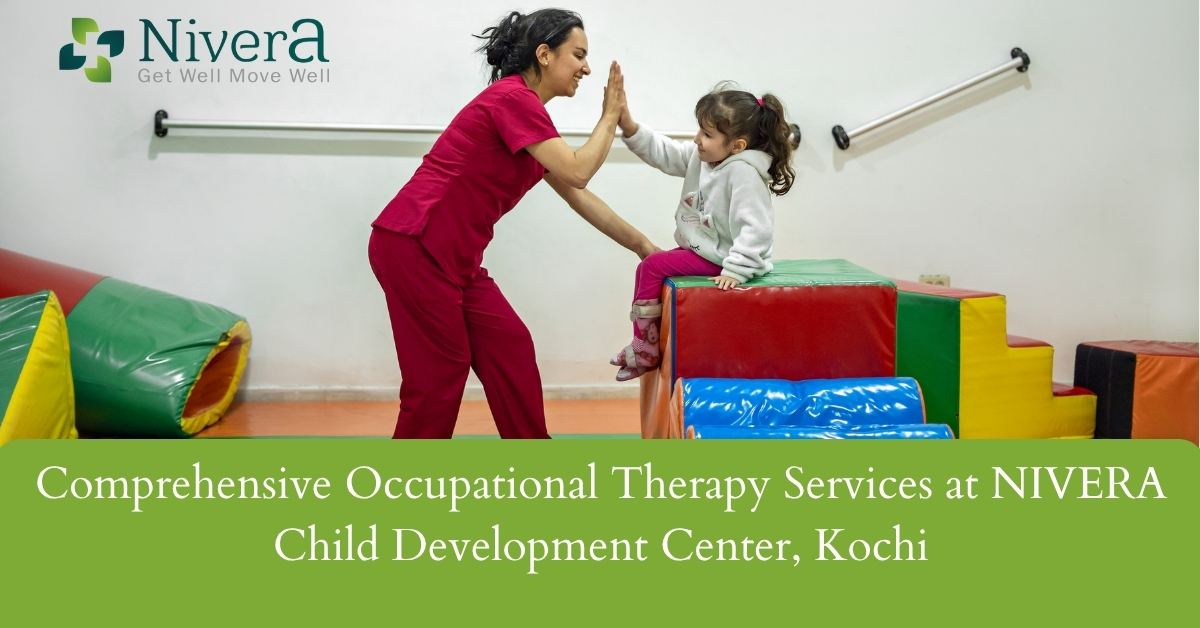
Occupational Therapy Services kochi
In today’s fast-paced world, developmental challenges among children and functional difficulties among adults and elderly individuals are on the rise.  NIVERA Child Development Center in Kochi is committed to offering high-quality, affordable, and accessible Occupational Therapy services tailored to children, adults, and the elderly.  With a team of dedicated professionals, NIVERA stands out as a trusted name when searching for the best occupational therapist in Kochi. Why Occupational Therapy is Essential for Children Occupational Therapy for children focuses on improving the child’s ability to perform daily activities such as writing, dressing, playing, and interacting socially.  At NIVERA, our pediatric occupational therapists are trained to handle conditions like autism, ADHD, cerebral palsy, sensory processing disorders, and developmental delays. By enrolling in one of the best pediatric therapy programs in Kochi, your child will benefit from customized therapy plans.  These are developed after a thorough occupational therapy assessment, ensuring each child’s unique needs are addressed with targeted interventions. Top 5 Benefits of Occupational Therapy in Kochi Improved Motor Skills – Helping children develop fine and gross motor abilities for better school performance. Enhanced Social Skills – Boosting confidence and communication through therapeutic play and role-modeling. Increased Independence – Empowering individuals to manage daily tasks without assistance. Behavioral Regulation – Teaching coping strategies to manage frustration, hyperactivity, or sensory overload. Support for Families – Educating and involving caregivers to reinforce therapy at home. With these benefits, it’s no wonder that Occupational Therapy in Kochi is becoming increasingly sought after by families looking to support their child’s holistic development How to Choose the Best Occupational Therapist in Kochi Choosing the right therapist involves careful consideration. Look for therapists who are: Certified and experienced in pediatric care. Using effective occupational therapy techniques like sensory integration, play-based therapy, cognitive-behavioral strategies, and assistive technology. Offering home-based occupational therapy when travel is difficult or when the child benefits from therapy in a familiar environment. Part of a multidisciplinary team that includes speech therapists, physiotherapists, and psychologists. NIVERA’s team checks all these boxes, making it one of the top local occupational therapy clinics in Kochi. Exploring Speech Therapy Options in Kochi At NIVERA, we also provide speech therapy in Kochi, complementing occupational therapy to address communication disorders that often coexist with developmental conditions.  Combining these services ensures comprehensive support for the child’s growth. Finding Affordable Occupational Therapy Services in Kochi Healthcare can be costly, but NIVERA is committed to offering affordable occupational therapy without compromising quality.  We believe that every child and adult deserves access to world-class rehabilitation, which is why our packages are thoughtfully designed to suit families from diverse economic backgrounds. Occupational Therapy for Adults and Elderly in Kochi While children form a major portion of our client base, occupational therapy for adults is equally essential.  Adults recovering from stroke, traumatic brain injury, or surgeries benefit greatly from therapy focused on regaining independence.  Similarly, occupational therapy for the elderly at NIVERA addresses issues such as arthritis, cognitive decline, and mobility problems, promoting a better quality of life.   Understanding the Occupational Therapy Assessment Process Before therapy begins, a comprehensive occupational therapy assessment is carried out. This includes: Interviews with parents or caregivers Standardized testing and observation Goal-setting in collaboration with the family This structured process helps in developing a customized treatment plan that addresses the individual’s specific functional limitations and developmental needs. Physical Therapy vs Occupational Therapy: What’s the Difference? It’s common to confuse physical therapy with occupational therapy, but the goals differ: Physical Therapy focuses on improving physical function, strength, and mobility. Occupational Therapy helps individuals regain or improve the ability to perform daily activities. At NIVERA, we provide both services, ensuring comprehensive rehabilitation services in Kochi under one roof. How Occupational Therapy Supports Mental Health Another lesser-known area is occupational therapy for mental health. Our therapists help individuals with anxiety, depression, and behavioral disorders regain a structured daily routine, social engagement, and vocational skills.  It’s a holistic approach to mental wellness, often integrated with counseling and behavioral therapy. Real Stories: Successes in Occupational Therapy from Kochi NIVERA has numerous occupational therapy success stories. One such case involves a 2.6-year-old boy diagnosed with global developmental delay  who struggled with delay speech, sensory processing and fine motor skills.  After 6 months of occupational and speech therapy in Kochi at NIVERA, he showed remarkable progress in communication, achive milestone , and daily living skills. These real-life stories inspire hope and motivate more parents to seek timely intervention. Essential Tips for Maximizing Occupational Therapy Benefits To get the most from occupational therapy: Consistency is key – Attend sessions regularly. Practice at home – Reinforce what’s learned during therapy. Communicate with the therapist – Share observations and concerns. Set realistic goals – Celebrate small victories. Stay involved – Family involvement enhances therapy outcomes. These occupational therapy tips are provided as part of our parent training modules at NIVERA. Conditions Treated by Occupational Therapy in Kochi NIVERA specializes in treating a wide range of conditions: Autism Spectrum Disorder Cerebral Palsy Sensory Processing Disorder ADHD Developmental Delays Stroke Rehabilitation Orthopedic Injuries Dementia and Alzheimer’s If you’re searching for comprehensive rehabilitation services in Kochi, NIVERA is a one-stop solution. Discover Local Occupational Therapy Clinics in Kochi If you’re exploring local occupational therapy clinics in Kochi, we invite you to visit NIVERA Child Development Center at Kumbalam. We offer a welcoming environment with advanced equipment, experienced therapists, and compassionate care for your loved ones Occupational Therapy plays a vital role in empowering individuals across age groups to live independent, meaningful lives.  At NIVERA Child Development Center, Kochi, we pride ourselves on being a center of excellence for occupational therapy in Kochi, offering a holistic, affordable, and result-oriented approach. Whether you’re looking for therapy for your child, adult rehabilitation, or elderly care, NIVERA is your trusted partner. Contact us today to begin your journey toward healing and independence
Read More
Open chat
Hello ????
Can we help you?