Autism and Speech Therapy Cost in Kochi: What Parents Should Expect

By Nivera Child Development Centre, Kochi

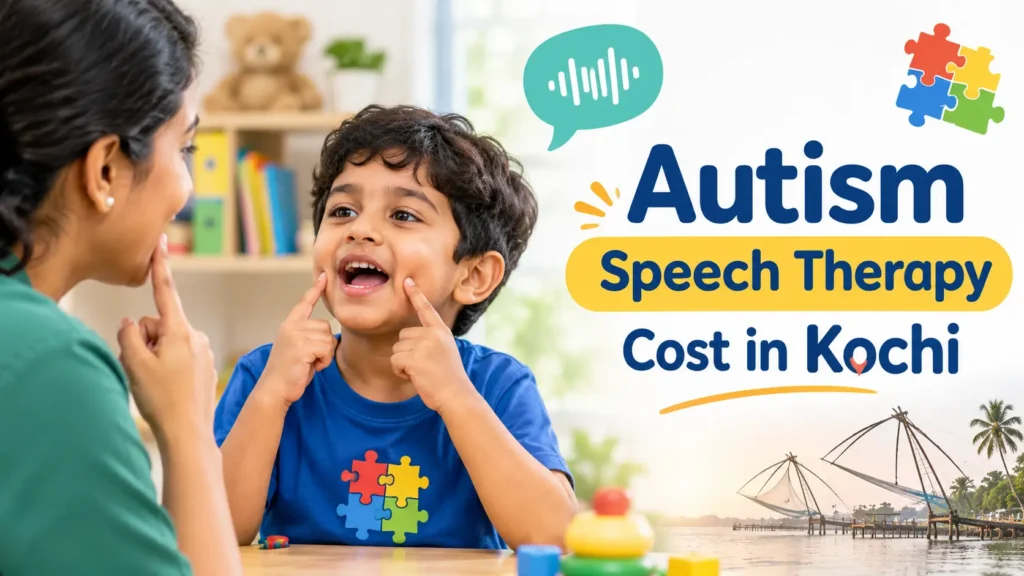
Autism speech therapy session at Nivera Child Development Centre in Kochi, Kerala, showing a child practising speech sounds with a female speech therapist, with the banner highlighting autism speech therapy costs in Kochi.

One of the first questions parents ask after noticing a delay is simple: “How much will therapy cost?” It is a fair question, and a hard one to answer online, because most centres do not publish their fees and no two children need the same plan.

This guide explains what autism therapy cost in Kochi usually depends on, what a realistic monthly budget looks like, which government schemes can help, and how to judge whether a plan is worth the money. Use it to plan with confidence before you walk into any centre.

Quick Answer: What Does Autism and Speech Therapy Cost?

Across India, structured speech or autism therapy is typically priced at roughly ₹550 to ₹2,500 per session, according to a cost guide from Pinnacle Blooms Network. Kochi centres generally fall within a broad band like this, but the exact fee depends on the therapist’s experience, the type of therapy, and whether sessions are individual, group or online.

Treat this as a planning range, not a quote. The only reliable number is the one a centre gives you in writing after assessing your child.

What You Pay For at Each Stage

Therapy cost is not one bill. It is usually a handful of separate items, and knowing them helps you compare centres fairly.

  • Developmental assessment:

    Usually a one-time fee, billed separately from ongoing sessions. It covers communication, sensory profile, behaviour, motor skills and learning readiness, and it decides which therapies your child actually needs.

  • Individual therapy sessions:

    One-to-one speech therapy, occupational therapy or behaviour therapy. This is the most common format and, per session, the most expensive.

  • Group therapy:

    Small-group sessions for social skills, peer interaction and regulation. These usually cost less per session than individual therapy.

  • Online therapy:

    Tele-sessions that cut travel time and cost. Useful for families outside Ernakulam and for NRI parents.

  • Multidisciplinary autism programme:

    Speech, OT, behaviour support and special education working from one plan. The total is higher because several specialists contribute, but it avoids paying for disconnected therapies.

  • Special education and school readiness:

    Structured learning support for classroom routines, sitting tolerance and writing readiness.

  • Parent guidance:

    Coaching and home programmes. Often the highest-value item, because progress depends on what happens between sessions.

What Affects the Cost of Therapy in Kochi?

Six things move the price more than anything else:

  • Type of therapy: Speech therapy, occupational therapy, ABA-based behaviour therapy and special education are priced differently.
  • Session format: Individual sessions cost more than group sessions. Online sessions are often more affordable once travel is counted.
  • Frequency and length: More sessions per week and longer sessions raise the monthly total, even when the per-session fee is modest.
  • Complexity of needs: A child with speech delay alone needs a different plan from a child who needs speech, OT and behaviour support together.
  • Therapist experience: Senior specialists usually charge more than newly qualified therapists.
  • Single therapy or combined programme: A coordinated plan costs more per month but is planned around one set of goals.

The simplest formula is: sessions per week × 4 weeks × fee per session.

As an illustration only, at ₹1,000 per session, two sessions a week works out to about ₹8,000 a month, and three sessions a week to about ₹12,000. Many centres recommend more frequent sessions in the early months and then reduce as the child progresses, so your budget may change over time.

How often your child needs therapy depends on their assessment, not on a standard rule. Our guide explains how to think about it.

Fees at Nivera Child Development Centre

Speech Therapy:

Each session lasts 45 minutes and costs approximately Rs.550/-. The frequency of
sessions is decided based on assessment. This service supports children with speech delays and
communication issues.


Occupational Therapy:

Each session lasts 45 minutes and costs approximately Rs.850/-. The frequency of
sessions is decided based on assessment. Therapy focuses on sensory and motor skills, as well as
activities of daily living (ADL) training.


Behavioral Therapy:

Each session lasts 45 minutes and costs approximately Rs.550/-. The frequency of
sessions is decided based on assessment. This service supports children with autism, ADHD, and
behavior-management needs.


Special Education:

Each session lasts 45 minutes and costs approximately Rs.550/-. The frequency of
sessions is decided based on assessment. It provides learning support and academic assistance.


Integrated Primitive Reflex Therapy:

Each session lasts 45 minutes and costs approximately Rs.950/-. The
frequency of sessions is decided based on assessment. It aims to improve focus, coordination, and
learning by integrating retained reflexes.


Physiotherapy:

Each session lasts 45 minutes and costs approximately Rs.550/-. The frequency of sessions
is decided based on assessment, with a developmental evaluation and plan.


Assessment Package:

The assessment takes approximately 1–2 hours. The fee ranges from Rs.1500/- to
Rs.3000/-, and the assessment frequency or requirements are determined based on the child’s assessment.
It includes developmental evaluation and planning.

Ways to Reduce or Offset the Cost

Therapy is a long commitment, so it is worth knowing what support exists. Always confirm current rules and eligibility directly with the scheme, as they change.

  • Niramaya health insurance: A National Trust scheme that offers cover of up to ₹1 lakh per year for persons with autism, cerebral palsy, intellectual disability and multiple disabilities. It is a reimbursement scheme with sub-limits, and you must be registered with the National Trust. Check whether the therapies you plan to use are claimable under the current benefit chart.
  • UDID card and disability certificate: Needed for most disability benefits and concessions, and often the first document to arrange.
  • Government early intervention centres: District Early Intervention Centres under the RBSK programme offer screening and early support at government hospitals. They can be a useful complement alongside private therapy.
  • Group and online formats: Where your child’s plan allows, these lower the per-session cost.
  • Home programmes: Consistent practice at home improves results and can reduce how many sessions you need over time.
  • Start with an assessment: An accurate assessment stops you paying for therapies your child does not need yet.

How to Judge Whether a Plan Is Good Value

The cheapest session is not always the best value. A clear plan with measurable goals, parent coaching and regular review usually delivers more progress per rupee than a low fee with no structure.

Be cautious if a centre:

  • Quotes only a per-session fee, with no written plan, goals or review dates.
  • Promises a cure or guaranteed results. No ethical provider can.
  • Pushes you to prepay a long package before assessing your child.
  • Cannot tell you who the therapists are or what their qualifications are.

Questions to Ask Before You Enrol

  • What does the assessment fee include? Ask whether it covers a written report.
  • Who will treat my child? Ask for the therapist’s qualification and experience.
  • What are the goals, and when will we review them? Good plans name specific goals and review dates.
  • How is parent involvement handled? Ask about coaching and home programmes.
  • What happens if we miss sessions? Clarify cancellation and make-up policies.
  • Are there online or group options? These may reduce cost.

Start With an Assessment, Not a Guess

Many families begin therapy without knowing whether their child needs speech therapy, OT, behaviour support or a combination. That is how money is spent on the wrong things. A developmental assessment gives you a clear picture, a recommended plan and a realistic cost before you commit.

Frequently Asked Questions

How much does autism therapy cost in Kochi?

Autism therapy in India typically ranges from about ₹550 to ₹2,500 per session. In Kochi, the actual fee depends on the centre, therapist experience, type of therapy and session format. Ask for a written fee sheet after assessment.

Is speech therapy cheaper than autism therapy?

Speech therapy alone is usually cheaper than a full autism programme, because autism plans often combine speech, OT, behaviour support and special education. The right choice depends on your child’s assessment.

Is the assessment fee separate from therapy fees?

No. Don't ignore your child, but don't try to talk them out of it either. Stay calm, keep them safe, reduce sensory input, and stay nearby until it passes.

Does insurance cover autism therapy in India?

Some support exists. The Niramaya scheme offers up to ₹1 lakh per year on a reimbursement basis for autism, cerebral palsy, intellectual disability and multiple disabilities. Private policy coverage varies, so check your policy terms and the scheme’s current benefit chart.

How many sessions will my child need each week?

This depends on the child’s needs and goals. Many children need more frequent sessions early on, then fewer as they progress. Your therapy plan should state this clearly and be reviewed regularly.

vision for your kid

Conclusion

Autism and speech therapy cost in Kochi is hard to pin down with a single number, but it becomes manageable once you know what drives it: the type of therapy, the format, how often your child attends and how complex their needs are. Plan using a per-session range, ask for a written plan, use the schemes available to you, and judge value by progress, not price alone.

If you are unsure where to begin, start with an assessment. You will leave with clarity on what your child needs, how often, and what it is likely to cost.

Disclaimer

This article is for general informational and educational purposes only and does not constitute medical advice, diagnosis, or a treatment plan. If your child is hurting themselves or others, or you are worried about their safety, please seek immediate help from a qualified professional or emergency service. Sudden changes in behaviour can also have medical causes such as pain or illness, so please consult a paediatrician. For guidance specific to your child, please consult the clinical team at Nivera Child Development Centre.

Leave a Reply

Your email address will not be published. Required fields are marked *

Open chat
Hello ????
Can we help you?